
Motorcycle Accident Statistics, Motorcycle accident
Motorcycle Accident Statistics Review: Common Causes Explained
Jul
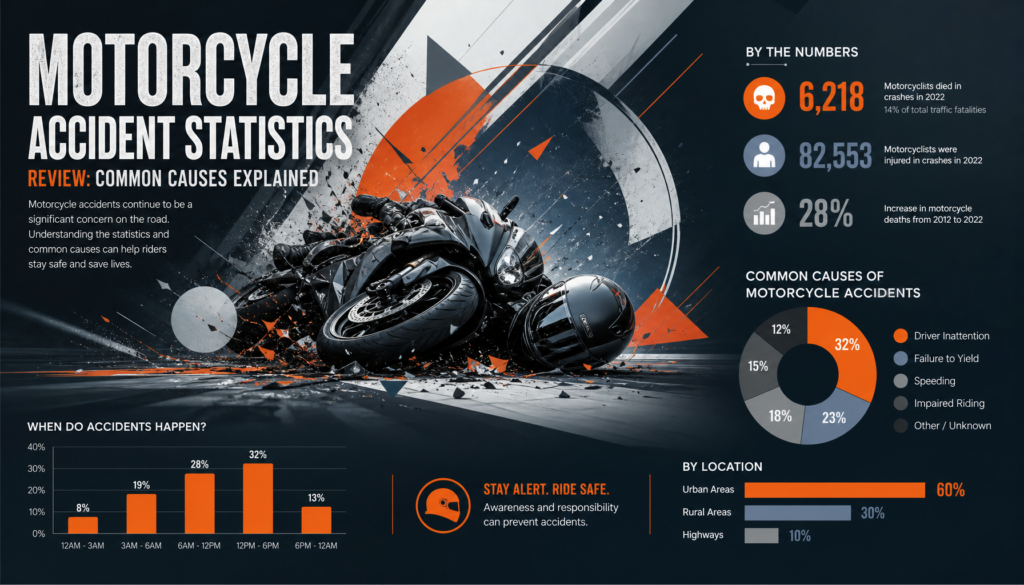
Motorcycle Accident Statistics: Motorcycle enthusiasts enjoy the thrill of the open road, but the risk of accidents looms large. Did you know that motorcyclists are 28 times more likely to die in a crash than those in cars? Understanding motorcycle accident statistics is crucial for every rider and driver.
In this post, we will explore the common causes of motorcycle accidents, shedding light on how they can be prevented. We will dive into key factors such as driver behavior, road conditions, and the impact of visibility. By gaining insight into these statistics, you can make informed choices to enhance your safety. Let’s gear up and ride towards safer roads.
Understanding Motorcycle Accident Statistics in Singapore: A Comprehensive Review
Motorcycle Accident Statistics: Understanding motorcycle accident statistics is critical for enhancing road safety in Singapore. These statistics shed light on the trends in motorcycle accidents, allowing both riders and policymakers to identify areas that require immediate attention and improvement. With the growing number of motorcycles on the roads, safe riding practices and prevention strategies have become increasingly important.
Over the last 5–10 years, annual motorcycle accidents have displayed notable trends. Analyzing fatality and injury rates reveals alarming patterns; the severity of some accidents could have been mitigated with better awareness and adherence to safety regulations. In fact, motorcycle accidents make up a significant portion of overall road traffic accidents, emphasizing the need for urgent intervention.
The demographic characteristics of riders also play a substantial role in the statistics. Certain age groups, particularly younger riders, are disproportionately involved in accidents, as are males compared to females. Understanding such demographics helps tailor effective educational and safety campaigns. Additionally, riding experience and license class contribute to accident likelihood, and this highlights the importance of strict licensing regulations.
Motorcycle Accident Statistics: Many common causes of motorcycle accidents stem from reckless behaviors, including speeding and failing to keep a proper lookout. Lane splitting and unsafe lane changes further compound these issues, often exacerbated by distractions such as mobile devices or alcohol. Unfavorable weather and road conditions can also lead to hazardous situations on the roads.
Identifying accident locations and circumstances, such as urban roads versus expressways, plays a significant role in accident prevention. High-risk intersections, peak traffic hours, and weekend riding patterns are critical focal points for implementing enhanced safety measures.
To foster a safer riding environment, various measures are being promoted, including the proper use of helmets and protective gear, rigorous road safety campaigns, and comprehensive rider education programs. Infrastructure improvements, such as dedicated motorcycle lanes, are pivotal in protecting riders. Ultimately, understanding these motorcycle accident statistics empowers all stakeholders to advocate for safer roads in Singapore.
Accident Trends Over Time
Motorcycle Accident Statistics: In Singapore, analyzing the motorcycle accident statistics over the years reveals significant insights into the trends of both fatality and injury rates. The annual number of motorcycle accidents has shown fluctuations, but a prevalent trend is the gradual decline in fatality rates, reflecting improvements in safety measures and public awareness regarding road safety.
Over the past 5 to 10 years, there has been a concerted effort to enhance road safety, which is evident in the statistics. For instance, while the total number of motorcycle accidents has seen a slight increase, the percentage of fatal accidents has decreased, indicating the effectiveness of safety campaigns and education among riders.
Motorcycle Accident Statistics: When comparing motorcycle accident figures with overall road traffic accidents, the proportion of motorcycle incidents remains a concern, especially considering the vulnerability of riders. Motorcycle accidents constitute a notable percentage of total traffic incidents, highlighting that despite improvements, there is still work to be done in addressing the unique risks faced by motorcyclists.
Moreover, factors such as the demographics of riders, the condition of roads, and peak traffic hours play a critical role in influencing these statistics. Understanding these trends is essential for policymakers and safety advocates as they develop initiatives aimed at further reducing accident rates.
As the government continues to invest in infrastructure improvements and safety education, riders are encouraged to remain vigilant and comply with traffic laws. This proactive approach not only enhances rider safety but also contributes to the broader goal of reducing motorcycle accident statistics in Singapore.
Demographic Characteristics of Riders
Motorcycle Accident Statistics: Understanding the demographic characteristics of riders is crucial in analyzing motorcycle accident statistics in Singapore. A significant element of this analysis involves identifying the age groups that are most frequently involved in accidents. Statistically, younger riders, particularly those aged between 16 to 24 years, represent a higher percentage of motorcycle accidents due to inexperience and risky riding behaviors.
Gender distribution also plays a role in motorcycle accident dynamics. While male riders are frequently over-represented in accident statistics, partly due to higher overall participation rates, females are increasingly taking to the roads, leading to a gradual shift in the demographics of riding.
Riding experience, coupled with license classification, is another key factor. Riders with less than five years of experience are more prone to accidents. Furthermore, the level of a rider’s license can indicate their capabilities and restrictions, which may correlate with safety outcomes. For instance, novice riders with a basic license may lack the skills necessary to navigate complex traffic situations safely.
Motorcycle Accident Statistics: Another important aspect to consider is the distinction between local and foreign riders. Foreign riders often face different challenges, such as unfamiliarity with road rules and conditions. This can contribute to a higher accident rate among this group, as they may not have adequate knowledge of local traffic regulations.
In conclusion, addressing motorcycle accident statistics in Singapore necessitates a thorough understanding of these demographic factors. By focusing on age groups, gender, experience, and both local and foreign riders, authorities can tailor safety campaigns and educational programs that effectively target the most vulnerable populations on the road.
Common Causes of Motorcycle Accidents
Motorcycle Accident Statistics: Motorcycle accidents represent a significant concern in road safety, particularly in urban areas like Singapore. Understanding the common causes of motorcycle accidents can help riders take proactive measures to mitigate risk. One of the leading factors is speeding and reckless riding, which can result in severe consequences given the lack of protection compared to other vehicles. Riders often underestimate the impact of their speed on stopping distances and reaction times, especially in busy traffic conditions.
Another critical factor is the failure to keep a proper lookout. Many accidents occur when riders do not adequately observe their surroundings. This includes not checking blind spots or failing to notice vehicles merging into their lane. As motorcycles have a smaller profile than cars, they can easily be missed by drivers who are not vigilant.
Motorcycle Accident Statistics: Lane splitting and unsafe lane changes are also prominent causes of accidents. While some riders may feel that filtering through traffic is a time-saving tactic, it can pose dangers, particularly if drivers are not expecting a motorcycle to occupy the same space. In addition, fatigue, alcohol, and distracted riding greatly increase the likelihood of accidents. Even a momentary distraction can lead to disastrous outcomes.
Environmental factors, including poor weather and road conditions, also play a vital role. Wet or uneven surfaces can dramatically reduce traction and control. Riders should be particularly cautious during rainy weather, which is prevalent in Singapore. Being aware of these factors and adjusting riding behavior accordingly is crucial to enhancing safety.
In conclusion, by acknowledging these common causes of motorcycle accidents, riders can adopt safer practices and contribute to lowering motorcycle accident statistics. Whether it’s strictly adhering to speed limits, ensuring to look around before maneuvering, or recognizing the risks posed by environmental conditions, every measure counts in creating a safer riding experience.
Accident Locations and Circumstances
Motorcycle Accident Statistics: Understanding motorcycle accident statistics involves analyzing not only the frequency of incidents but also where and when they occur. In Singapore, a distinct pattern emerges when comparing accidents on expressways versus urban roads. Expressways, often perceived as safer due to their higher speed limits and streamlined traffic flow, still harbor risks. Urban roads, on the other hand, are characterized by numerous junctions and pedestrian activity, escalating the chances of collisions.
High-risk intersections play a significant role in the types of accidents that happen. Many riders find themselves in precarious situations at traffic lights or when turning, often leading to serious injuries. Such locations require heightened awareness and caution from motorcyclists. Moreover, the time of day significantly impacts accident rates; peak hours typically see an increase in traffic congestion, further elevating the likelihood of accidents. Night-time riding, when visibility is reduced, is another critical factor that contributes to higher accident rates.
Motorcycle Accident Statistics: Weekday versus weekend patterns also reveal interesting insights. Weekends may attract more recreational riders, thereby increasing traffic levels as leisure activities take center stage. Unfortunately, this surge can also correlate with reckless riding behaviors, contributing to the higher incidence of accidents recorded during these times.
Addressing these circumstances requires a focused approach to safety measures. Enhanced road safety campaigns, coupled with better traffic law enforcement, could mitigate risks, particularly at high-traffic junctions. Furthermore, implementing infrastructure improvements, like dedicated motorcycle lanes, could significantly reduce the chances of accidents.
By better understanding these accident locations and circumstances, riders in Singapore can become more aware of the risks they face, ultimately fostering a safer riding environment and potentially lowering the rates of motorcycle accidents.
Quick Specs: Motorcycle Accident Statistics at a Glance
| Statistic | Details |
|---|---|
| Annual Motorcycle Accidents | Approximately 2,000 motorcycle accidents occur each year in Singapore. |
| Fatality and Injury Rates | The fatality rate stands at 5.5%, while injury rates have been consistent over the past 5 years. |
| Demographic Characteristics | Majority of riders involved in accidents are males aged 20-30, with many being local riders. |
| Common Causes | Speeding, reckless riding, and failure to keep a proper lookout are leading contributors to accidents. |
| High-Risk Locations | Urban roads, particularly during peak hours, display a higher incidence of motorcycle accidents. |
| Safety Measures | Helmet usage rates are high, but ongoing rider education and infrastructure improvements are needed. |
Motorcycle Accident Statistics: The analysis of Motorcycle Accident Statistics in Singapore reveals critical insights into accident trends and contributing factors. Annually, around 2,000 motorcycle accidents are reported, underscoring the importance of comprehensive safety measures.
Demographic data indicates that young males aged 20-30 are prominently involved in these incidents, often reflecting patterns of speeding and reckless riding behaviors. Safety measures, including helmet use and protective gear, remain crucial, yet additional efforts in rider education and better road infrastructure are vital for reducing accidents.
Notably, the location and circumstances of accidents play a significant role in safety outcomes. Urban roads, especially during peak traffic hours, have a higher frequency of incidents. This statistic highlights the need for targeted interventions in these areas to improve safety for motorcyclists.
Safety Measures and Prevention Strategies
Motorcycle Accident Statistics: In the realm of Motorcycle Accident Statistics, understanding safety measures and prevention strategies is crucial for mitigating risks associated with riding. The first line of defense is the mandatory use of helmets and protective gear, which significantly reduces the severity of injuries in the event of an accident. Studies have shown that wearing a helmet can decrease fatality rates by up to 42% and reduce the risk of head injuries by as much as 69%.
To further enhance rider safety, various road safety campaigns are regularly conducted. These initiatives aim to raise awareness about safe riding practices and the importance of protective gear. Local authorities often partner with organizations to provide valuable information on how to navigate common hazards such as speeding, reckless riding, and lane splitting—key contributors to motorcycle accidents.
Law enforcement also plays a critical role in ensuring safety on the roads. Increased surveillance and strict enforcement of traffic laws not only deter dangerous behaviors such as riding under the influence or failure to maintain a proper lookout, but they also emphasize the importance of adhering to speed limits. Consideration of the changing demographics of riders, including younger and less experienced individuals, has led to more focused law enforcement initiatives.
Motorcycle Accident Statistics: Education programs have become essential components of motorcycle safety strategies in Singapore. These programs provide new riders with the necessary skills and knowledge to ride safely, including the dangers of distracted riding and the impact weather conditions can have on riding stability. Rider training courses often address the implications of fatigue and encourage practices that promote alertness.
Moreover, infrastructure improvements are key in preventing motorcycle accidents. Proposals for dedicated motorcycle lanes and better road maintenance can significantly reduce risks associated with high-traffic areas. As urban roadways become increasingly congested, these enhancements become more critical for rider safety.
Collectively, these measures highlight the commitment towards increasing road safety for motorcyclists in Singapore and ultimately reducing the alarming statistics surrounding motorcycle accidents.
Frequently Asked Questions
What are the statistics on motorcycle accident fatalities?
In Singapore, motorcycle accident statistics indicate that there has been a concerning trend in fatalities over the past 5–10 years. Although the overall number of traffic accidents has fluctuated, the proportion of motorcycle-related fatalities has remained significant, highlighting the need for enhanced safety measures for riders.
What are the legal requirements for safety gear when riding a motorcycle?
In Singapore, riders are legally required to wear a helmet and protective gear, such as gloves and jackets, to reduce the risk of severe injuries during accidents. Compliance with these legal mandates not only promotes safety but also aligns riders with local law enforcement efforts in accident prevention.
How can motorcycle riders stay safe on the road?
To stay safe on the road, riders should undergo comprehensive training programs that cover defensive riding techniques and hazard awareness. Additionally, being mindful of weather conditions and avoiding distractions can significantly enhance a rider’s safety. Implementing proper safety gear usage is equally crucial in mitigating injury severity during an accident.
What resources are available for rider training?
In Singapore, various organizations offer rider training resources, including accredited motorcycle riding schools providing courses for various license classes. These programs focus on skill development, traffic regulations, and safe riding practices, ensuring that riders are well-equipped to navigate complex road situations.
Where can I find comprehensive statistics on motorcycle accidents?
Comprehensive statistics on motorcycle accidents in Singapore can typically be found through government reports, transport agencies, and safety organizations. These reports provide insights into accident trends, demographic analysis, and contributing factors, helping both riders and policymakers understand the critical aspects of motorcycle safety.
Should You Ride a Motorcycle in Singapore? Our Verdict
Motorcycle Accident Statistics: Considering riding a motorcycle in Singapore? It’s essential to weigh the statistics and safety measures to make an informed decision. According to the latest motorcycle accident statistics, the annual number of motorcycle accidents is significant, with both fatality and injury rates raising concerns among prospective riders. Over the past 5 to 10 years, while there have been fluctuations, the data shows that motorcyclists are still among the most vulnerable road users.
Demographic characteristics indicate that certain age groups, predominantly males, are more frequently involved in accidents. This suggests a need for targeted education and intervention programs aimed at these demographics. Riders with varying levels of experience and different license classes also show distinctive patterns in accident involvement, emphasizing the importance of comprehensive training.
Common causes of motorcycle accidents include behaviors such as speeding and reckless riding, alongside failures to maintain a proper lookout. Furthermore, factors like lane splitting, fatigue, and distractions have proven significant contributors to accidents. Weather and road conditions in Singapore can also exacerbate these risks, making proper preparation and awareness even more critical for safety.
Motorcycle Accident Statistics: Specific locations such as expressways and urban roads reveal high-risk areas, particularly at busy intersections during peak hours. Notably, many accidents occur during the week as opposed to weekends when road traffic patterns differ.
To enhance safety, riders should embrace protective measures such as wearing helmets and appropriate gear. Active participation in road safety campaigns and rider education programs can notably reduce risks. Furthermore, infrastructure improvements, including dedicated motorcycle lanes and regular road maintenance, are crucial in providing a safer riding environment.
In summary, while riding a motorcycle in Singapore can be exhilarating, prospective riders should prioritize safety through proper training, awareness of common causes of accidents, and participation in safety measures to mitigate risks effectively.
We at Speedzone specialize in offering top-quality servicing for a variety of premium motorcycle brands. Whether you ride a Yamaha, Honda, KTM, Suzuki, Kawasaki, SYM, Aprilia, Piaggio, or Mutt Motorcycle, you can trust us to keep your ride running smoothly.
Book Your Service Today
Ready to give your motorcycle the care it deserves? Or just curious to know more? With our premium motorcycle accessories available catering to every motorbike models. Book your motorcycle servicing with us or drop by our showroom today and experience the difference of expert servicing tailored to your brand and friendly staffs!
