
Yamaha Motorcycle, Scooter Motorcycle, Yamaha Technology
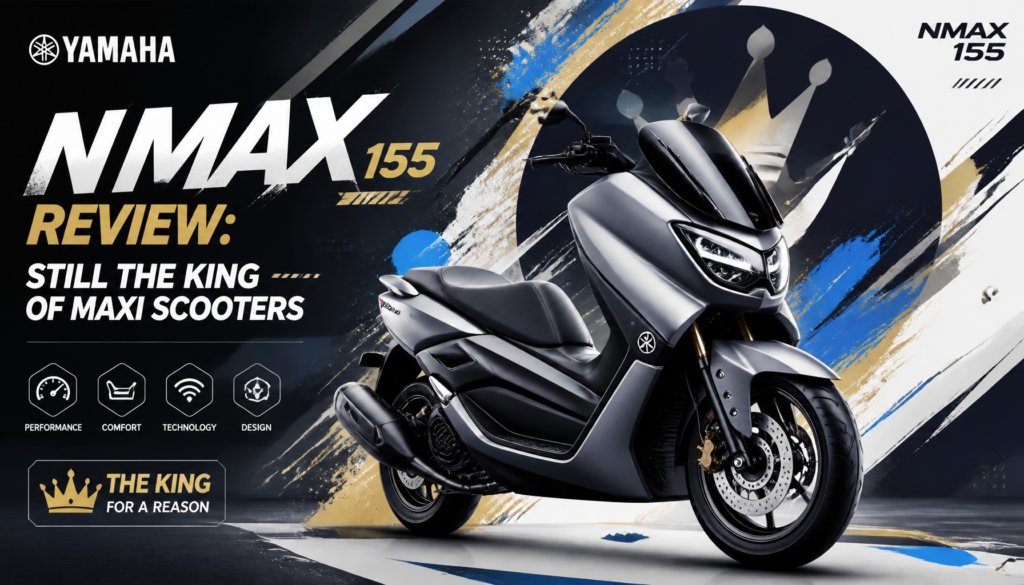
Yamaha NMAX 155 Review: Still the King of Maxi Scooters
Jul
Yamaha NMAX 155 Review: Daily riders face a quiet frustration: the scooter that feels brilliant on morning traffic can quickly feel dull by the end of the week. If you are comparing options for a practical city ride, Yamaha NMAX 155 Review often appears at the top of the search results. But is it truly still the king of maxi scooters in 2026, or just a familiar name?
This article walks through the real life points that shape a smart purchase. We’ll cover comfort, handling, and day-to-day usability, then check build quality, maintenance, and ownership comfort over time. You will also learn where it stands against other maxi scoot alternatives for city use, not in showroom claims but in use. By the end, you will know whether the Yamaha NMAX 155 still earns the hype or if it needs a replacement. Let us now move into the full review, starting with the design that first catches the eye.
Yamaha NMAX 155 Review: Still the King of Maxi Scooters in 2026?
Yamaha NMAX 155 Review: In 2026, the debate around whether the Yamaha NMAX 155 is still the benchmark in the maxi-scooter class is less about hype and more about day-to-day value. For city commuters, weekend tourers, and value-conscious upgraders, the real measure is whether the bike earns its place after daily rides, weekend trips, and real traffic chaos. A true “king” in this segment needs balance: comfort versus price, daily usability versus long-distance comfort, and reliability backed by useful technology.
The review framework is therefore built around clear practical criteria: design practicality, ride feel, smart-safety tech, ownership cost, and competitor comparison. Those are exactly the questions riders ask when deciding between a practical upgrade and a lifestyle choice in dense urban markets where parking, short traffic cycles, and mixed commutes drive buying behavior.
- Design & practicality: updated styling and stronger road presence, plus LED lighting, digital/TFT display, and smartphone connectivity.
- Everyday use: under-seat storage, ergonomics, and general practicality for commuting essentials.
- Engine & riding confidence: a 155cc Blue Core engine with Variable Valve Actuation (VVA), smooth CVT acceleration, fuel efficiency, and workable highway capability.
- Smart-safety and convenience: ABS, Traction Control System (TCS), Smart Key, Start-Stop, and Y-Connect.
- Ownership lens: comfort, reliability, maintenance impressions, and value versus rival pricing.
Yamaha NMAX 155 Review: On paper, the styling and feature set are not gimmicks; they solve everyday friction points. LED lighting and a digital/TFT display improve visibility and information access, while smartphone integration helps ride planning feel smoother. Under-seat storage and practical riding posture matter heavily for office commutes, grocery runs, and weather-swings where small storage compromises quickly frustrate owners.
Engine feel is equally central to the value argument. The listed 155cc VVA setup aims for smooth, predictable pull rather than aggressive peak behavior, which suits stop-and-go city rhythm and supports longer stints without tiring either rider or machine. That can reduce the fatigue tax many city riders experience when forced to ride harsh, non-linear power delivery.
Technology matters most when it supports safer habits: ABS and TCS bring more confidence in variable traction, and Smart Key plus Start-Stop improve convenience and daily efficiency. Against alternatives like the Honda PCX 160, Honda ADV160, and Yamaha Aerox/NVX 155, your decision should start with comfort-to-price fit, not brochure wars. If you are considering a 2026 upgrade and want the blend of premium features, comfort, and routine reliability, buying a Yamaha NMAX 155 still looks like a trustworthy path, with the caveat that riders who prioritize plush suspension or strong wind shielding should test-ride before final commitment.
Design & Premium Features: Why the 2026 NMAX Still Looks Like a City-Class Scooter
Yamaha NMAX 155 Review: For daily riders asking whether the Yamaha NMAX 155 still plays in the premium city category, the 2026 styling says it does. The newer look keeps the model’s recognizable maxi-scooter shape while introducing cleaner lines and sharper paneling so it appears current in dense urban traffic. In practical city use, this is important: you want a scooter that looks confident when parked close to office towers or in tight residential lanes, not one that screams “cheap utility bike.”
One meaningful evolution is in lighting. LED lighting gives the bike stronger nighttime visibility, and the sharper headlamp styling improves daytime visibility too, which helps in mixed traffic where quick signalling and object detection can be life-saving. Many daily commuters run into unpredictable stretches of low-light roads, and better forward visibility lowers stress during the first few hours of a long workday ride.
The upgrade to a digital/TFT display also changes daily usability. Important trip data is easier to digest at a glance, reducing glances and distraction when you need to stay alert around intersections and slow traffic flows. Added smartphone connectivity supports practical commuting habits like navigation setup and timely communication, which can matter in cities where people rely on shared rides, office drop-off windows, and traffic-heavy routes to stay on schedule.
Yamaha NMAX 155 Review: Ergonomics on the NMAX 155 are designed for real streets rather than a test track. The rider triangle supports relaxed wrists and shoulders in stop-go traffic, while the pillion posture remains practical for occasional two-up rides, making it easier to use the scooter as family transport on errands. In many commuter-heavy markets, this comfort-first geometry matters more than a racier stance because most miles happen in traffic, at low speeds, and with frequent starts and braking.
Under-seat storage is another strength in the daily-use equation. You can realistically carry essentials for work-life commuting—helmet, office bag, and rain protection—without turning each ride into a packing drill, and that is exactly where premium features stop being cosmetic. If you often carry oversized bags, storage limits become the real-world trade-off, so plan your load for comfort and stability.
- Pros: updated looks without losing city identity, improved visibility, clearer display behavior, and genuinely useful connectivity for navigation and communication.
- Cons: visible premium finish means owners notice scuffs more quickly, and compact under-seat volume still requires smart packing habits on heavy commute days.
If your decision is still between appearance and utility, this generation of the Yamaha NMAX 155 is a safe middle ground. It does not force a compromise between looking modern and running a practical daily commute, which is exactly why many riders still consider it a compelling city-class choice.
Engine Performance & Riding Experience: Blue Core VVA and CVT Behavior in Real Traffic
Yamaha NMAX 155 Review: In real-world use, the Yamaha NMAX 155 is judged less by brochure claims and more by how it responds after repeated starts, lane changes, and long stretches of mixed traffic. Buyers comparing city commute tools in 2026 usually care about smoothness, confidence and rider fatigue, and this is exactly the section where this scooter’s engine character becomes the deciding factor.
The 155cc Blue Core with VVA gives this bike its practical edge. With usable low-to-mid torque, roll-on response is immediate enough for start-and-stop conditions without forcing aggressive throttle inputs, and it feels composed instead of abrupt. That broad delivery helps people who commute in places with tight stop-go cycles because it reduces the mental load of constantly revving at the wrong moment.
Its CVT behavior reinforces that easygoing character. In dense city traffic, acceleration is smooth and predictable, so wheelspin and hesitation are rare when you squeeze the throttle. For riders who value throttle control over theatrical power delivery, this setup feels safer and more controlled, especially while filtering through buses, autos, and unpredictable lane shifts.
Yamaha NMAX 155 Review: Move from side streets to arterial roads, and the same traits translate into confident overtaking with less fuss. You don’t need to chase the tachometer; the motor builds drive progressively, making short passing windows easier to exploit. The result is not a hyper-sport sensation, but for practical traffic riding it gives reliable thrust without draining focus.
On longer highway stretches, comfort and stability become as important as punch. The engine’s character remains civil enough to hold speed comfortably, and the transmission’s continuity helps you avoid constant wrist fatigue from unnecessary gear-hunting-like feeling that can come with abrupt responses. Drivers in extended commutes usually report that vibration stays controlled, so the ride feels less tiring over time.
If your use case combines short office runs, weekend family errands, and occasional open-road travel, this behavior reduces the chance that you’ll consider switching after a few days. In dense metro markets where daily mileage and traffic stress are major buying factors, the balance of tractable acceleration and controlled vibration gives the Yamaha NMAX 155 a useful everyday advantage. For practical buyers, that reliability in everyday conditions is often worth more than headline acceleration numbers.
Technology & Safety: ABS, TCS, Smart Key, Start-Stop and Y-Connect in Use
Yamaha NMAX 155 Review: When evaluating the Yamaha NMAX 155 as a practical city-and-weekend machine, the real story in the Technology & Safety chapter is how its electronics support safe, predictable riding in mixed conditions. If you ride in dense traffic, this is where the bike earns trust quickly: the ABS, traction control, Smart Key, Start-Stop, and Y-Connect are not just features to list, but daily-use tools.
ABS and TCS make the biggest difference on wet roads, where sudden braking can quickly turn into a panic situation. On slippery intersections and painted road patches, ABS helps prevent wheel lock and keeps directional control, while TCS reduces aggressive rear-wheel spin. On uneven surfaces, especially where potholes alternate with rough edges, both systems reduce the chance of skids by giving you a safer response window, helping you carry momentum without overcorrecting.
Yamaha NMAX 155 Review: Still, there is a learning curve. Many experienced riders who move from a basic scooter into a feature-rich setup initially feel the interventions are intrusive on perfectly dry, open roads. That is normal: muscle memory says “always full confidence in instant power,” but electronics may soften that reaction. After a few rides, you likely recalibrate your inputs and begin using the intervention systems as an aid rather than a crutch.
Smart Key mainly helps with convenience and theft-related peace of mind. For commuters leaving office parking lots, apartments, or shared spaces, keyless access reduces hassle and lowers the chance of key-loss stress. The convenience is real, but it is still not a substitute for physical bike security habits like controlled parking and anti-theft accessories.
Start-Stop appeals most to stop-and-go riders who spend long periods idling at signals. In crowded stoplight-heavy cities, cutting engine idle can improve efficiency and reduce heat/noise at the rear. Yet for people who prefer immediate throttle response in very short gaps, it can feel disruptive at first, so it helps to know when to expect automatic cuts and when to override for smoother flow.
Y-Connect is useful once you invest time in initial pairing and profile setup. The value appears on longer commutes: ride data snapshots, navigation access, and remote checks (where supported) become practical, especially for family errands and service planning. Riders wanting a low-maintenance routine usually find it less useful if they never use smartphone integration.
In short, these systems are strongest when they match your routine: real-world value in monsoon traffic, city heat, and long-distance planning; gimmick territory only when you leave them on autopilot and never build correct usage habits. With that mindset, the Yamaha NMAX 155 continues to position itself as a tech-forward, confidence-first maxi-scooter choice for daily reality rather than showroom headlines alone.
Quick Specs: Yamaha NMAX 155 at a Glance
Yamaha NMAX 155 Review: For buyers comparing 2026 maxi scooters, a focused spec snapshot helps cut through hype and focus on what matters for daily use. The Yamaha NMAX 155 is often evaluated through a mix of comfort, reliability, and modern features, so this section translates core claims into practical buying signals rather than showroom talk. If your purchase is driven by commuting realism, this format keeps the decision practical and less emotional.
Use the table below as a quick filter before you visit the showroom. It is built on the points repeatedly emphasized in ownership and road-use discussions: engine character, ride feel, rider-assist systems, utility features, and long-term ownership confidence.
| Quick Specification | What this means for riders |
|---|---|
| Engine format: 155cc Blue Core VVA | Yamaha NMAX 155 owners usually look for balanced performance for traffic and cruising. A 155cc VVA setup is positioned for smooth, usable power delivery across daily city flow and occasional highway stretches, so it fits mixed riding routines rather than single-use scenarios. |
| Transmission: CVT | Continuous Variable Transmission supports easy city control, especially in dense traffic where frequent gear changes are tiring. For many buyers, this lowers the learning curve and adds comfort on short, stop-start commutes. |
| Safety electronics: ABS and TCS | ABS and the Traction Control System improve confidence during sudden braking and slippery surface transitions. Riders who prioritize predictable control in rain or uneven road conditions gain practical safety value from these features. |
| Convenience & comfort features: LED lighting, TFT display, Smart Key, Start-Stop, under-seat storage, connectivity | LED visibility, modern dashboard information, smartphone-linked utility, and secure key access all support premium day-to-day usability. Under-seat storage and start-stop behavior improve practical ownership for urban users juggling office rides, groceries, or short errands. |
| Ownership traits: maintenance intervals, reliability reputation, service availability | Long-term value is shaped by how often maintenance is needed, how dependable the machine remains, and how quickly nearby authorized support can service it. If workshop access is a priority in your region, confirm local dealer reach early to avoid maintenance delays that can erode the buying advantage. |
From a buyer’s perspective, this is why the Yamaha NMAX 155 remains a strong contender in 2026 for people who value dependable use over flashy complexity. If your main objection is cost, remember that your total experience depends on usability and service convenience, not just sticker price. If those practical boxes are ticked, the scooter’s feature set becomes a meaningful reason to choose it with confidence.
Buyer Concern Check: Storage, Weather Exposure, and Commuter Constraints Before You Buy
Yamaha NMAX 155 Review: Before committing to any purchase, pause and treat this as a Yamaha NMAX 155 lifestyle fit test, not just a spec-sheet exercise. With the 2026 market crowded with commuter-friendly options, your everyday pain points matter more than brochure speed figures. In a city environment, riders usually care most about whether the scooter works in heat, rain, crowds, and uneven roads after a full day of commuting.
The NMAX 155’s under-seat storage and practical layout are meaningful for daily use, especially when paired with a quick digital/TFT setup that helps you keep essentials organized. The key test is not absolute volume, but retrieval flow: can you grab your items quickly between stop-go traffic waves and still lock the bike securely in tight spots? If you carry multiple bags for a long office commute, check how often you need to stop and repack during the day. This is where practicality outruns marketing claims.
Wind protection is another real objection, especially for riders doing highway connectors or long rain-soaked commutes. A weakness flagged by many users is reduced airflow shielding, so your torso angle, riding posture, and weather tolerance should be assessed during a practical ride, not just a test-drive loop. With the Yamaha NMAX 155’s 155cc Blue Core platform and VVA, the engine side often feels competent, but comfort can still dip when exposed to monsoon gusts, heat, and open-road wind. Bring a realistic rain plan: if your route is wet for days each month, decide if this is acceptable or if you need extra rain-layering discipline.
Yamaha NMAX 155 Review: Comfort and handling were praised for mixed conditions, yet suspension stiffness has been noted as a drawback in rough roads, and that becomes very noticeable with a pillion. For pothole-heavy routes, test the bike with your usual load, not an empty basket; broken roads, hard braking, and sudden lane shifts expose setup limits quickly. If your passenger regularly rides with you, make a brief two-way test so both rider and pillion feel stable during stop-go braking.
Quick checklist for congested cities:
- Parking dimensions: verify the scooter’s width and turning circle feel manageable in your office or home parking slot.
- Stop-go braking: check predictable leverage and confidence at low speed before peak traffic hours.
- Luggage habits: match your daily bag count to under-seat practicality and your route’s frequent stop pattern.
- Heat/rain practicality: simulate a rainy and humid day to see if comfort and visibility remain acceptable.
Finally, confirm local license, displacement, and emission requirements in your region before finalizing the booking. Some states and cities apply tighter compliance or registration rules that can quietly change ownership costs and riding legality. If your routine passes these checks, this commuter still has a strong argument as a practical 155cc choice for 2026.
Yamaha NMAX 155 vs Honda PCX 160, Honda ADV160, and Yamaha Aerox/NVX 155: Still the King?
Yamaha NMAX 155 Review: Selecting among Yamaha NMAX 155, Honda PCX 160, Honda ADV160, and Yamaha Aerox/NVX 155 in 2026 is no longer just a spec-and-sticker comparison. For dense city use with occasional highway stretches, riders are evaluating comfort retention, storage realism, safety stack, and whether the bike feels calm enough over daily stop-start traffic. In markets where insurance, road taxes, and maintenance commitments matter, the decision becomes a real ownership-cost equation, not a brochure battle.
Here is a head-to-head by the same ride-use criteria.
| Rival model | Comfort | Practicality | Tech stack | Fuel behaviour | Handling confidence | Ownership cost profile | Head-to-head outcome |
|---|---|---|---|---|---|---|---|
| Honda PCX 160 | It favors a comfortable commuter posture, while the benchmark model generally feels more premium for longer rides. | Both are practical, but the under-seat layout and ergonomic focus of the benchmark model suit daily utility better. | The benchmark carries a denser electronics mix with LED/TFT, smartphone connectivity, Smart Key, Start-Stop, ABS, and TCS. | Its 155cc Blue Core with VVA and smooth CVT feel support efficient city use and useful highway continuation. | City and mixed-distance riding is generally calmer and less fatiguing in the benchmark tune. | Long-term reliability and build quality are noted strengths; rivals can still compete if the buyer puts price first. | Lead: premium comfort-tech blend. Value share: lower up-front spend options. |
| Honda ADV160 | Useful and functional, but the benchmark is usually more forgiving on repeated commute cycles. | Practical daily riding is strong in both, with the benchmark helping on storage and route comfort consistency. | Safety and convenience tech are more consolidated in the benchmark; this matters for those using connected features daily. | Benchmark behavior remains predictable across mixed distances, helping riders avoid aggressive fuel anxiety. | Rider confidence is generally higher when ABS/TCS and suspension smoothness are part of the package. | Maintenance perception is positive for the benchmark, with rivals often chosen for simpler initial cost planning. | Lead: balanced confidence package. Value share: buyers preferring a narrower feature brief. |
| Yamaha Aerox/NVX 155 | Suspension stiffness and wind protection can be trade-offs, yet comfort depth remains strong for longer duty with the benchmark. | Daily utility remains close, but practical commuting and easy storage are perceived as stronger on the benchmark side. | Benchmark includes a wider rider-assurance set with rider aids and connectivity focus. | In city-to-highway flow, smooth CVT response remains a practical advantage. | The benchmark’s handling balance helps confidence in unpredictable traffic and stop-go traffic. | Both can work in ownership terms, though premium feature density can impact purchase economics. | Lead: stronger tech and convenience. Value share: buyers willing to forgo added stack for simplicity. |
| Overall winner logic | For comfort-first riders who cover mixed commutes, this is the clear front-runner. | Strong practicality with less compromise in real-day logistics keeps it hard to beat. | Riders who value ABS, TCS, and phone integration likely value this offering first. | Efficient behavior and smooth delivery remain easy-to-live-with strengths. | Handling confidence is consistently reassuring for city and longer stretches. | Pricing and feature mix still decide the final move, especially where budgets are tight. | Yamaha NMAX 155 still earns the “still the king” label when comfort, safety confidence, and long-term value outweigh initial price sensitivity. |
If your buy decision is value-first and your route is short, one competitor can still be the smarter move. If your route includes heavy traffic complexity, highway joins, and family-ride practicality, the feature-backed comfort proposition usually shifts the odds. In short, the king tag stays relevant, but only for riders whose daily use and budget truly align with what this class leader delivers.
Pros, Cons & Ownership Experience: Reliability, Cost of Use, and Long-Term Satisfaction
Yamaha NMAX 155 Review: If you’re evaluating long-term ownership in 2026, the biggest question is not just whether a scooter is fun, but whether it stays sensible after years of real use. The Yamaha NMAX 155 is often bought for daily commuting and longer weekend trips, so comfort, reliability, and predictable service costs become part of the verdict. In dense city environments where traffic stress, short trips, and tight storage are part of life, those factors can outweigh raw specs.
- Core strengths: the 155cc Blue Core engine with VVA delivers smooth CVT take-off and generally good fuel efficiency, which helps riders who rack up consistent weekly distance without frequent fuel-stop anxiety.
- Safety and confidence: ABS and Traction Control System (TCS), along with Smart Key and start-stop integration, add confidence when traffic conditions vary, including wet starts or sudden urban braking.
- Comfort and practicality: ergonomics, under-seat storage, and premium styling make longer rides and office-to-store commutes feel less tiring than many entry-level alternatives, while also helping with local utility.
- Perceived quality: LED lighting, TFT info, and smartphone connectivity build trust in ownership because the machine feels more premium when inspected, not only in photos.
- Known trade-offs: suspension can feel firm on rough surfaces and wind protection is adequate but not luxurious, and the pricing asks you to justify comfort against cheaper local offers.
From an ownership perspective, this scooter rewards riders who are diligent with routine servicing. While exact intervals depend on the rider and dealer guidance, practical maintenance usually stays around basic checks many owners already budget for: lubrication health, tire and brake condition, clutch/CVT-related inspection points, and periodic software or settings checks for rider aids. The practical upside is that most concerns are mostly preventive, not catastrophic, so costs are easier to plan.
Yamaha NMAX 155 Review: After high-mileage use, the big question is confidence. In real usage, the Yamaha NMAX 155 tends to be evaluated on whether small issues stay small and whether comfort holds when daily fatigue builds. Its premium build feel and predictable delivery often keep ownership stress lower than expected, even when pricing pressure is a concern.
The pricing versus value equation gets clearer when matched against rider priorities. If your daily routine includes longer commutes, mixed city/highway riding, and a preference for lower stress over lower sticker shock, the cost-to-comfort balance can be justified. If you want the cheapest possible entry and softer ride character above everything else, then checking rivals like the Honda PCX 160, Honda ADV160, and Yamaha Aerox/NVX 155 in person is smart before finalizing.
In short, this is a bike for buyers who value dependable running, quality feel, and practical city touring support, and who are ready to pay for that confidence package over time.
Frequently Asked Questions
Yamaha NMAX 155 Review: Is it enough for occasional highway use?
For occasional highway runs, Yamaha NMAX 155 is generally up to the task for riders who mostly commute in urban areas with short faster stretches. The 155cc Blue Core engine with VVA and smooth CVT response helps with steady acceleration and highway transitions without feeling abrupt. It does, however, show comfort limits in real use—firmer suspension and wind protection—so if your route is a regular long highway loop, test long-distance comfort before committing.
Yamaha NMAX 155 Review: How does it compare to the Honda PCX 160 for daily commuting comfort?
Compared with the Honda PCX 160, commuting comfort comes down to body fit and daily routine, not only engine size. The scooter usually stands out for day-to-day usability with LED lighting, digital/TFT information, smartphone connectivity, and practical storage access. For buyers in dense city traffic, a ride from morning to evening peak is the most reliable way to decide which machine is easier on your body and workflow.
Yamaha NMAX 155 Review: Is 155cc too expensive versus other maxi scooters today?
If the question is value rather than displacement, then 155cc is not automatically a premium. The value case is built around comfort, reliability perception, and feature depth over time, especially if you use the bike for daily commutes. Compare financing, dealer support, and expected maintenance cadence in your city, because long-term ownership in 2026 often decides which maxi scooter stays in your daily route.
Yamaha NMAX 155 Review: Are ABS and TCS worth paying for on an urban scooter?
For riders in dense traffic, ABS and TCS are often worth the extra cost because they help in stop-go and mixed-road situations where corrections happen fast. In urban rain-weather starts and sudden decelerations, traction and anti-lock behavior can improve rider confidence and reduce panic braking errors. If your budget is strict and your routes are predictable, they can be optional, but for unpredictable monsoon-heavy city use, the safety margin is significant.
Yamaha NMAX 155 Review: Is it still a smart choice if I need storage and rain-weather reliability?
For storage-first buyers, Yamaha NMAX 155 is a practical pick thanks to under-seat space and commuting-friendly ergonomics. When weather changes quickly and surfaces vary, this mix of practicality and confidence features keeps it relevant as a daily machine. If you carry bulky rain gear or large shopping loads, check real-world packing volume with a test ride because the storage is useful, though compact, and may need support accessories for occasional heavy loads.
Should You Buy the Yamaha NMAX 155 in 2026? Final Verdict and Next-Step Recommendation
Yamaha NMAX 155 Review: Yamaha NMAX 155 can still be the right call in 2026, but the final verdict should be based on how you ride, not on hype. For buyers who want a practical maxi scooter with premium touches, the model still stands out because it blends comfort, daily usability, and modern features into a single package. If your commute mixes stop-go traffic, weekend touring, and occasional longer road trips, this is where the bike’s overall balance starts to pay off.
Best buyer profiles are straightforward: urban professionals who sit upright for comfort, riders who value ABS and Traction Control System (TCS) for confidence, and those who want smartphone-linked convenience through Y-Connect, Smart Key, and Start-Stop integration. The 155cc Blue Core engine with VVA plus smooth CVT behavior gives confidence in city acceleration and enough highway capability to feel composed beyond short commutes. That combination, along with premium lighting, TFT readout, and storage ergonomics, makes ownership feel less like compromise and more like an all-season setup.
Yamaha NMAX 155 Review: There are edge cases where you should skip it. If your priorities are soft suspension, heavy wind shielding, or a lower initial price than current market deals from rivals suggest, check alternatives carefully. Current buyer feedback highlights three real drawbacks: firmer suspension feel, wind protection limits, and a pricing equation that can pressure budget-focused shoppers when compared head-to-head with the Honda PCX 160, Honda ADV160, and Yamaha Aerox/NVX 155 landscape. In some markets, practical buyers also care about finance packages and dealership relationship more than raw spec sheets.
Before signing, run through these concrete steps:
- Take a test ride across city traffic and open-road stretches to verify engine delivery, suspension behaviour, and comfort.
- Compare dealer offers, not just out-the-door prices, including warranty terms and service package value.
- Check local regulation fit for registration class, licensing, and any city-specific road or parking incentives before committing.
- Inspect warranty and service network coverage in your area, because convenience matters more than a one-time discount.
- Verify the exact feature set on the unit you are buying, including ABS/TCS, Smart Key, Start-Stop, and connectivity setup.
If these checks land cleanly and your priorities match comfort, reliability, and value-over-simplicity, the 2026 Yamaha NMAX 155 still deserves its crown as a top-tier maxi scooter. It may not be the cheapest option, but its complete package is strongest where riders need confidence, usability, and long-term practicality rather than bargain hunting alone. That practical advantage is what keeps it in “king” territory for many buyers today.
We at Speedzone specialize in offering top-quality servicing for a variety of premium motorcycle brands. Whether you ride a Yamaha, Honda, KTM, Suzuki, Kawasaki, SYM, Aprilia, Piaggio, or Mutt Motorcycle, you can trust us to keep your ride running smoothly.
Book Your Service Today
Ready to give your motorcycle the care it deserves? Or just curious to know more? With our premium motorcycle accessories available catering to every motorbike models. Book your motorcycle servicing with us or drop by our showroom today and experience the difference of expert servicing tailored to your brand and friendly staffs!
