
Fantic Caballero Rally, Fantic Motorcycles
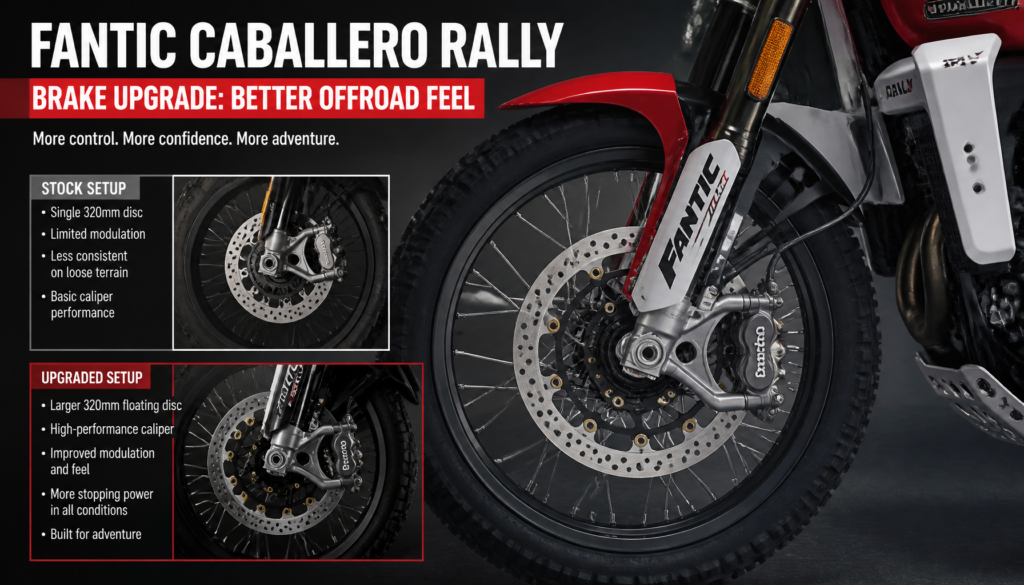
Fantic Caballero Rally Brake Upgrade: Better offroad feel
Aug
Fantic Caballero Rally Brake Upgrade: When the trail gets rough and a fast stop is needed, weak brakes steal your confidence fast. This is exactly where a focused setup can matter most. In the Fantic Caballero Rally Brake Upgrade: Better offroad feel scene, riders are not chasing race lap times. They want smooth, predictable response where the bike sticks through mud, gravel, and steep drops.
This guide covers the practical side of upgrading brakes for better off-road control. We will look at where the current stock setup may fall short, then break down simple changes that improve feel and power. You will also learn how to balance front and rear braking, why feel matters more than raw force, and how to check whether your setup is truly better after each change. A quick setup checklist and a short testing routine are included so you can judge results on the first ride rather than guessing. By the end, you will have a clear, practical path for stronger, more controlled braking that suits real off-road use, and a plan to tune it to your own riding style.
Fantic Caballero Rally Brake Upgrade for Adventure Riding: Why Off-Road Confidence Starts at the Lever
Fantic Caballero Rally Brake Upgrade: If you ride the Fantic Caballero Rally beyond smooth streets, you probably already know the pain: stock brakes can feel fine on pavement and still feel inconsistent once the terrain gets mixed. Mountain pass braking, especially downhill through tight corners, exposes how quickly confidence can drop when lever feel changes between the first and tenth hard stop. That is why this Fantic Caballero Rally Brake Upgrade conversation matters—your goal is not showier hardware, but repeatable, predictable stopping in real conditions.
On-road and light adventure miles, the factory front and rear system usually gives useful initial control and moderate modulation, which is why many riders are tempted to leave it untouched. The limitation appears after repeated high-load use: lever feel can soften as heat builds, and response on loose surfaces becomes less certain. If your use case includes long descents, rain, or rough trail transitions, that is the moment to prioritize reliability over pure power.
Upgrading pad compounds and rotors should be your first meaningful step because it directly changes bite, feel, and consistency. In this context, a pad change that improves wet-weather and heat tolerance can give better confidence than big-ticket mechanical changes, while a rotor choice focused on durability can help reduce fade when the brake is asked to work hard. The most useful upgrades are those that improve progressiveness and feedback, not the ones that make the bike hook up harshly and surprise you on gravel.
Fantic Caballero Rally Brake Upgrade: Next, line and fluid quality should be treated as a performance upgrade, not a maintenance afterthought. Braided lines help preserve a firmer lever feel, and fresh, correct-spec brake fluid reduces sponginess caused by moisture and repeated cycling. For riders in humid regions or who store bikes for weeks between rides, a strict fluid-change routine is often the cheapest and most effective safety gain you can make.
For confidence off-road, remember that maximum bite is not a badge of quality. On loose footing, controllability comes from modulation, ABS behavior, tyre grip, and suspension setup working together. Learn to back off the lever pressure at the edge of traction, and let ABS do its part before the system reaches its limit.
- Daily road focus: prioritize clean lever consistency and low-maintenance parts; keep pad changes simple and legal for your local inspections.
- Touring focus: select durable pads/discs and set up routine fluid checks for long travel days and variable weather.
- Mixed road/off-road: balance bite and feel, and avoid aggressive components that reduce predictability on loose trails.
In short, a practical upgrade plan respects your local riding conditions, local service access, and budget. If your riding is mostly mixed terrain, a staged approach—brakes, then lines/fluid, then fine-tuning around ABS and technique—usually beats chasing every possible part. That way, confidence starts at the lever, where it belongs.
Stock Fantic Caballero Rally Braking System vs. Upgrade Path: What Works, What Limits You
Fantic Caballero Rally Brake Upgrade: For riders evaluating a Fantic Caballero Rally Brake Upgrade path, start by understanding the stock baseline first. Compared with the pre-upgrade standard used as your benchmark, the 2026 Fantic Caballero Rally setup is not a bad system by itself: the factory front and rear brakes generally deliver predictable modulation on asphalt, and the lever effort is usable for normal commuting and touring speeds. The big strength is control, not panic-stop aggression, which is exactly why the bike remains approachable in traffic and avoids abrupt lock-up tendencies for many owners.
Where limits appear is under repeated stress: slow technical descents, loaded downhill runs, and mixed surfaces with occasional loose stones. In those conditions, heat can increase lever softness and consistency can drift, while wet or dirty environments can weaken the confident first bite everyone expects when you grab for the lever early.
| Trait | 2026 Stock Setup (Pre-upgrade Baseline) | Upgrade Path Impact |
|---|---|---|
| Lever effort | Clean and controlled in normal use, but can become less crisp after repeated heavy application. | Fresh fluid and less elastic lines usually tighten initial response and reduce vague take-up. |
| Asphalt modulation | Progressive and forgiving, which helps smooth stops in traffic. | Better compounds and matched setup can improve confidence without making braking abrupt. |
| Heat on slow descents | Performance can soften with sustained cycles, especially before cooling periods. | Higher-performing pads/rotors improve resistance to fade and pedal consistency. |
| Light off-road response | Safe and manageable feel, but less reserve bite on steep loose sections. | Balanced pad choice can raise controllable bite while keeping modulation for gravel-like flow. |
| Common weak points | Pad wear, fluid condition, and hose behavior over time. | Line and fluid care targets repeatability, while routine replacement extends reliability. |
Fantic Caballero Rally Brake Upgrade: If your riding mix is mostly daily road use, keep the stock system and focus on maintenance first; for many adventure riders this is the highest value move before spending on bigger hardware. For touring and long descent days, a staged approach is smarter: upgrade pads and brake fluid first, then reassess, then add braided lines only if lever consistency still lags your expectations. In mixed off-road use, remember that maximum brake bite is not always the goal—ABS behavior, tyre grip and suspension setup often decide control more than raw hardware.
- Road-first riders: retain stock feel and plan preventive servicing.
- Touring riders: prioritize consistency upgrades that improve fade resistance.
- Adventure mix riders: seek progressive compounds and clean installation over extreme performance parts.
- Buyers in regions with annual vehicle checks: stable, well-maintained braking is easier to justify during inspections and long-term ownership.
That mindset keeps you from overbuying. A good decision is one you trust on day one and still trust after 200 km of dust, heat, and repeated braking. That is the essence of a practical Fantic Caballero Rally Brake Upgrade strategy.
Quick Specs: Fantic Caballero Rally Brake Upgrade at a Glance
Fantic Caballero Rally Brake Upgrade: For any rider planning a Fantic Caballero Rally Brake Upgrade, a quick spec comparison helps avoid buying upgrades that feel exciting in a showroom but feel harsh on real trails. The goal is not always the strongest brake feel; it is usually better modulation, predictable lever response, and less fade after long descents or repeated corner entries. This quick view is best used as a shopping checklist before parts are purchased.
All rows are upgrade-family based, not brand-brand branding, so you can compare what matters most for your route mix: city traffic, touring with luggage, or mixed road/off-road sections.
| Component | What changes in feel | When to choose it | Off-road control impact | Heat/fade resilience |
|---|---|---|---|---|
| Front brake pads (stock vs upgraded) | Stronger initial bite and clearer threshold, usually with a firmer lever feel. | Good for heavier pillion loads, frequent braking in traffic, and riders wanting more confidence from initial lever pull. | Can improve stopping confidence, but aggressive feel must be managed carefully on gravel to avoid wheel lock. | Generally better heat stability on repeated hard use; still depends on rider input. |
| Rear brake pads | More progressive release and finer feel at low lever force. | Useful when refining slow-speed technical control, tight switchbacks, and downhill balancing. | Improves trail feedback and reduces abrupt rear lock, helping keep rear wheel tracking. | Rear temperature rise is usually lower than front, so gains in fade control are noticeable but moderate. |
| Disc rotor style/type | Cleaner bite and steadier response once hot, with less variation between first and later braking events. | Pick an upgraded rotor when long descents or heavy-use mountain touring are common. | Can help consistent feel on repeated braking zones; too aggressive combinations may reduce tolerance on loose dirt. | Better resistance to heat stress than worn or contaminated discs when paired with proper bed-in and maintenance. |
| Line type: rubber vs braided | Braided lines usually give the clearest lever pressure and faster pressure transfer. | Best after pad/rotor work, or when rider consistency is a top priority. | Improves dosing accuracy, useful for balancing brake and throttle in rough tracks, but demands smoother hand control. | Less expansion means fewer feel changes over heat cycles; not a substitute for fluid service. |
| Fluid type and maintenance | Fresh, quality fluid restores crispness and helps the lever feel stable throughout a ride. | Always part of an upgrade path, especially before peak riding seasons and after heavy weather riding. | Stable lever feel reduces surprise moments during low-grip braking and improves trust in ABS transitions. | Directly improves fade resistance by removing water contamination and restoring boiling resistance within spec. |
| Rider level match | Beginners: calmer systems; advanced: stronger setups. | New riders should start with fluid + conservative pad choice; advanced riders can layer line and pad upgrades together. | Keeping setup below peak aggression protects confidence when surfaces change from pavement to loose dirt. | Balanced setups deliver reliable performance without forcing risky technique in heat-heavy riding. |
A practical buying sequence is often: brake fluid service first, then front pad tuning, then line/rotor upgrades if needed. This keeps cost down and keeps the bike controllable while still improving the ride. For local riders who perform maintenance less frequently, conservative upgrade selection is usually the safest path to an upgrade that performs daily, not just on test days.
Brake Pad and Disc Upgrades for Adventure Use: Better Bite Without Losing Control
Fantic Caballero Rally Brake Upgrade: For adventure riding, the Fantic Caballero Rally Brake Upgrade decision is often won or lost at the pad and disc level before any other mod. The stock setup can work on pavement and light terrain, but when mud, steep drops, and repeated descents enter the story, riders quickly notice where initial bite, modulation, and heat control start to separate ordinary parts from reliable ones.
In this context, pad compound choice is the first filter. A softer compound usually gives a quicker initial bite, which can help when you need gentle, progressive drag control in technical sections, but it may fade sooner under sustained load and can wear faster in aggressive use. A harder compound feels less grabby at first yet often keeps its confidence when the trail gets hot, especially on long downhill runs where repeated braking heat builds. If your riding includes slippery rain-soaked tracks, choose compounds that stay predictable in the wet and avoid abrupt transitions that can lock the front on loose surfaces; if your priority is steep mountain return roads, prioritize consistency over outright sharpness.
- Need quick modulation in uncertain grip: prioritize predictable bite and smooth lever feedback.
- Need control on long descents: favor higher heat tolerance and low fade drift.
- Rain-heavy regions or seasonal monsoon use: prioritize wet-weather consistency and clean water clearing behavior.
Rotors matter just as much. In off-road use, design is not only about stiffness; vane pattern, edge profile, and overall construction shape how mud is evacuated, how stable pad contact remains under heat, and how long the disc survives repeated rough use. A rotor that sheds contamination effectively is less likely to feel wooden in slush and grit, while better heat handling reduces heat fade and keeps the lever feel from “pumping up” unpredictably on steep, repeated brake applications. In areas where maintenance visits are less frequent or local shops have limited stock, this reliability is what keeps your braking confidence intact on tour days.
- Bench test: confirm strong initial bite without sudden grab.
- On-road check: repeat braking from moderate speed to confirm even heat rise and pedal/lever consistency.
- Field check: ride wet clay or gravel and verify the lever returns with confidence, no metallic judder or excessive noise.
- Endurance check: repeated stop cycles should keep feel stable with minimal fade.
Before buying, treat the upgrade as a system: pad, disc, and expected conditions. A Fantic Caballero Rally Brake Upgrade should give you confidence that your brakes feel sharp when needed and calm when surfaces change, helping you decide the stop point without a harsh, panic response. That balance is exactly what converts a good upgrade into a smart one.
Balanced Setup by Use-Case: Off-Road Control, ABS Behavior, and Real-World Buyer Constraints
Fantic Caballero Rally Brake Upgrade: For riders looking at a Fantic Caballero Rally Brake Upgrade, the best value comes from tuning for control, not raw grab. The factory front and rear brakes can handle road and light adventure work, but loose ground exposes differences in feel, modulation, and ABS behavior. A controlled setup helps you brake with confidence, not just with strength at the lever, which is exactly what mixed terrain riders need. Once this baseline is chosen, upgrades stay modular and reversible.
- Conservative (daily road) is the quiet-start package: fresh brake fluid and careful service first, with minimal hardware change. Keep rotor and pad choices moderate so lever response stays familiar, especially in traffic and low-speed city rides.
- Balanced (touring) adds confidence through improved consistency: braided lines plus pad selection aimed at steady bite and heat resistance on long descents. Pair this with a calm suspension setup and tyres that stay stable under varied load so ABS can intervene smoothly rather than abruptly.
- Progressive (mixed road/off-road) uses stronger pad/disc feel and more deliberate hand technique. The goal is predictable front brake dominance, a stabilising rear, and gentle squeeze on gravel or mud so tyre grip changes don’t trigger sudden lockups.
Buyer constraints matter as much as ride style. In some markets, modified brake components must remain road-compliant, and warranty terms can change if installation is outside approved channels. Before committing, check local access rules for off-road areas, confirm workshop familiarity with braided lines and ABS-related bleeding, and keep installation notes for future compliance checks.
Humidity and storage are often the hidden cost in tropical or wet climates: corrosion can appear around pistons and fasteners, reducing confidence even in a good setup. If your bike sits outdoors, keep it covered, dry the brake assembly after wet rides, and include fluid changes in seasonal prep. During wet months, reduce peak braking force and focus on smooth modulation; during dry season you can use the progressive setup with less fear of abrupt traction loss. Choose the package that matches your local riding pattern first, then upgrade again once you confirm maintenance access and legal comfort.
Frequently Asked Questions
What are the best Fantic Caballero Rally Brake Upgrade parts for off-road first?
For a Fantic Caballero Rally Brake Upgrade, there isn’t one universal best set. Start with a practical sequence: fresh brake fluid, then well-chosen pad compounds, and proper bleeding for consistent lever feel. Add upgraded rotors only after real-route testing shows heat or fade is limiting control; this keeps the setup reliable, easier to maintain, and less risky when inspection or long-distance reliability matters.
Will upgraded pads increase wheel lockup risk on mud?
Upgraded pads can increase initial bite, so in mud they may feel less forgiving at first. Lockup is usually tied more to rider modulation, body position, and ABS support than pad choice alone. Choose compounds that stay controllable in your local conditions and keep inputs smooth until your timing adjusts.
Do I need braided lines on a mild rider bike?
Not always. Braided brake lines help consistency when braking is repeated and hot, but mild use often gains more from regular inspections, a fresh fluid service, and clean pad replacement habits. If parts are harder to source where you buy locally, many riders upgrade lines only after they confirm the standard setup is no longer stable on their normal routes and storage constraints.
Does the brake upgrade affect ABS or ride modes?
Usually, upgrades affect lever feel more than electronic logic, but the point at which you trigger ABS can feel different. That is why it’s important to test every ride mode you use after installation on a safe loop, then re-check your braking references. If response feels strange, confirm system setup first (bleeding, line condition, free play) before assuming a ride-mode or ABS fault.
How much upgrade is enough for touring vs technical trail use?
For touring, enough usually means reliability and consistency: quality fluid, balanced pad compounds, and a strict maintenance rhythm before big rides. For technical trail use, add only one additional step—often targeted upgraded rotors or braided lines—once your baseline setup reaches its limit. Match the package to trip type and support conditions; remote adventure riders often value predictable control and easy repairability over the most aggressive combination.
Should You Buy the Fantic Caballero Rally Brake Upgrade? Our Verdict and Next Action Plan
Fantic Caballero Rally Brake Upgrade: If you are deciding whether to go ahead with the Fantic Caballero Rally Brake Upgrade, first decide what your brakes are actually missing. The factory front and rear setup can work well on pavement and light adventure routes, but many riders report it feels less consistent after repeated hard use, especially in heat or mud and wet-weather conditions.
The key is not to buy parts for show; it is to remove weak links in a sequence that matches how you ride and how you maintain your machine. A strong setup usually comes from confidence-first changes, not the loudest bite. That is especially useful for riders who want reliability during long distances and predictable behavior when traffic or trail surfaces change quickly.
Recommended minimum upgrade order:
- Pads and rotors first—this improves initial bite, progressive bite feel, and resistance to heat-related fade.
- Brake lines and fresh fluid next—better consistency in lever pressure and better repeatable feel when hot, provided installation and maintenance follow correct specifications.
- Final tuning last—small adjustments to leverage your setup to your style after testing.
This order also keeps your budget and risk low. Installing stiffer lines before changing friction surfaces often gives only part of the gain, while new pads/rotors first create a stronger base for meaningful improvements. If your local market is rain-prone or includes routine pre-ride checks, this staged path is easier to justify and easier to maintain correctly.
Use this quick matrix before committing:
| Rider type | Verdict | Best first step | Why |
|---|---|---|---|
| New adventure rider | Buy if braking feels vague under braking loads. | Pads/rotors | Builds confidence and teaches modulation on mixed traction. |
| Daily commuter | Upgrade only where needed. | Lines/fluid | Can stabilize daily lever feel while keeping cost controlled. |
| Mixed terrain touring rider | Strongly recommend staged Caballero Rally brake upgrade. | Pads/rotors, then lines/fluid | Great return on safety and control for long, varied trips. |
Final action plan is simple: avoid chasing maximum grip. In loose terrain, too much bite can reduce control, so remember ABS behavior, tyre grip, suspension setup, and rider technique matter as much as hardware. Test one controlled variable per ride, track lever feel before and after changes, then confirm trail confidence before adding more components.
We at Speedzone specialize in offering top-quality servicing for a variety of premium motorcycle brands. Whether you ride a Yamaha, Honda, KTM, Suzuki, Kawasaki, SYM, Aprilia, Piaggio, or Mutt Motorcycle, you can trust us to keep your ride running smoothly.
Book Your Service Today
Ready to give your motorcycle the care it deserves? Or just curious to know more? With our premium motorcycle accessories available catering to every motorbike models. Book your motorcycle servicing with us or drop by our showroom today and experience the difference of expert servicing tailored to your brand and friendly staffs!
