
Electric vs Petrol motorcycle, Electric bikes, Electric Motorcycles, Electric Scooters vs Motorcycle Scooters
Electric Scooter vs Petrol Scooter: Cost Breakdown
May
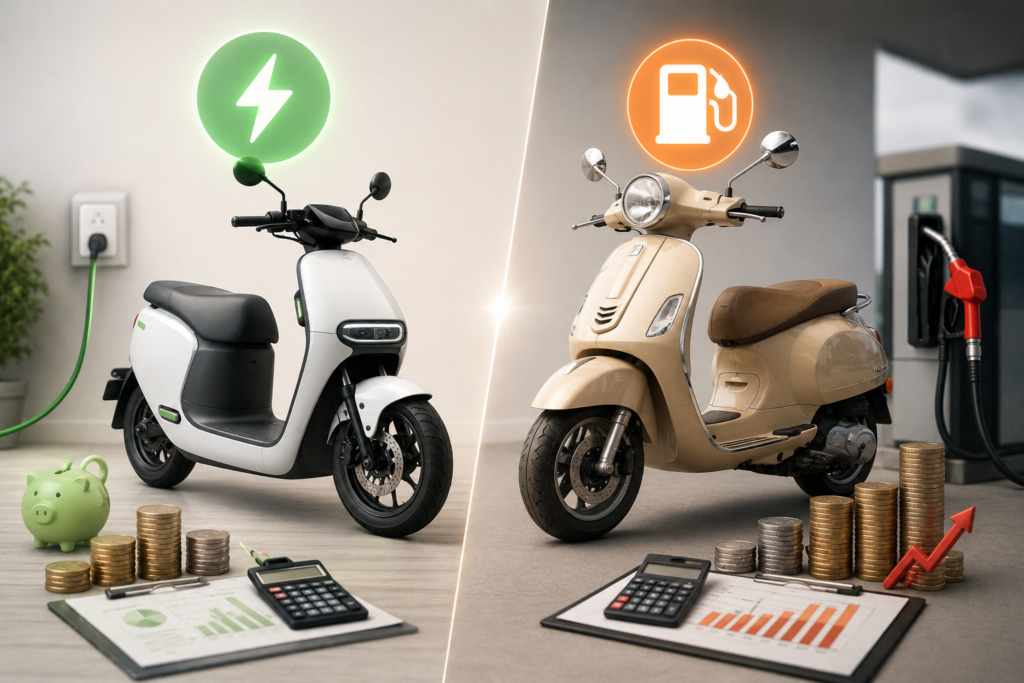
Electric Scooter vs Petrol Scooter: Stuck in daily jams and rising commuting costs? Many in Singapore are now asking which ride saves more money: electric scooter vs petrol scooter. As we head toward 2026, the real differences in running costs and convenience matter more than ever. This guide gives you a clear cost breakdown between both options, with local taxes, charging, and maintenance all explained.
We’ll share what you can expect to pay upfront and over time, and highlight the hidden costs riders often overlook. Compare savings side by side and spot what suits your lifestyle. By the end, you’ll have a sharper sense of which scooter helps your wallet and keeps you moving in Singapore’s fast-paced city life. Now, let’s dive into the real numbers behind each choice.
Electric Scooter vs Petrol Scooter: The Ultimate 2026 Cost Breakdown for Singapore Riders
Electric Scooter vs Petrol Scooter: The choice between electric scooter vs petrol scooter is becoming one of the hottest debates among Singapore riders as 2026 approaches. With daily commuting habits shifting and sustainability concerns rising, many are asking: which type of scooter really offers the smartest value? As local travel increases along HDB corridors and PCN paths, understanding the true cost difference is vital—both for your wallet and for meeting Singapore’s green transportation goals.
In Singapore, every dollar spent counts, especially when factoring in upfront purchase prices, government incentives, and the long-term ownership landscape. Petrol scooters, once dominant, now face fierce competition from electric models that benefit from evolving EV subsidies and tax incentives. While registration fees and financing structures may vary, savvy buyers increasingly demand a transparent look at the overall financial picture before making any commitment. That’s why this breakdown provides a clear, data-driven electric vs petrol scooter cost comparison tailored to the needs and expectations of Singapore riders in 2026.
Electric Scooter vs Petrol Scooter: Total cost of ownership covers far more than just purchase price. Considerations like monthly charging costs versus petrol refills, maintenance frequency, and the costs of battery replacement can significantly impact your budget over time. Moreover, day-to-day commuting expenses—whether for city rides or longer journeys—help determine the real-world value of each option. For those living in HDB flats, factors like overnight charging convenience, PCN accessibility, and government support directly influence which scooter is best suited to Singapore’s urban environment.
This post dives deep into each of these crucial areas, comparing the up-front, running, and long-term costs of electric and petrol scooters specific to our local context. If you’re searching for a scooter that balances affordability, practicality, and future-proofing against fuel price uncertainty and sustainability trends, this cost breakdown will arm you with the insights needed for a confident, informed decision.
Quick Specs: Electric vs Petrol Scooter Costs at a Glance
| Category | Electric Scooter | Petrol Scooter |
|---|---|---|
| Typical Upfront Price | Generally higher; offset by EV subsidies & tax incentives | Lower base price; fewer incentives |
| Available Subsidies/Incentives | Eligible for government EV grants/tax rebates (subject to LTA rules) | Usually not eligible for subsidies |
| Loan EMI | Similar tenures; small variations based on principal amount after incentives | Often lower monthly EMI due to lower initial price |
| Registration Fees | Subject to LTA fees; sometimes reduced for electric | Standard LTA fees |
| Electricity vs Petrol Consumption | Low charging cost; typically cheaper per km for city rides | Higher petrol cost; affected by future fuel price changes |
| 3–5 Year Maintenance Estimate | Lower servicing costs (fewer moving parts), but battery care required | Regular engine servicing, oil & filter changes, higher parts spend |
| Battery Replacement | Major cost after 4–5 years, crucial in long-term calculation | Not applicable (uses fuel tank) |
Electric Scooter vs Petrol Scooter: When choosing between Electric Scooter vs Petrol Scooter ownership in Singapore, reviewing these core cost differences helps you budget for both short and long term. Electric models often have higher upfront prices, but government incentives can lower your effective buying cost. Petrol scooters cost less at first but incur more on regular servicing and rising fuel prices over time.
Factor in your planned usage, as daily commuters may benefit more from the running cost savings of electric scooters, especially when charging at home (subject to HDB and LTA guidelines). This breakdown arms you with a clearer picture for smart purchasing in Singapore’s evolving transport landscape.
Breaking Down Upfront Costs & Financing in Singapore
Electric Scooter vs Petrol Scooter: When you’re considering Electric Scooter vs Petrol Scooter in Singapore for your next ride, understanding the upfront costs is crucial. Typically, electric scooters come with a higher sticker price compared to most entry-level petrol models, largely due to advanced battery technology and import pricing. However, recent government initiatives, such as dedicated EV subsidies and tax incentives, can help offset this difference for electric scooter buyers. The Land Transport Authority (LTA) periodically updates these grants to promote greener mobility, so checking the latest eligibility before purchasing is important.
Initial registration fees are generally similar across both types, but there may be additional one-time EV rebates or reduced road tax for electric scooters, depending on LTA regulations during your purchase year. Such savings can make a significant dent in the total on-the-road price for eco-friendly commuters. Singapore’s emphasis on sustainability has also spurred some exclusive financial incentives, providing electric scooter owners with a head start compared to petrol scooter buyers.
Electric Scooter vs Petrol Scooter: Financing options can further influence your decision. Major banks and local dealerships offer loan packages or extended EMI plans for both electric and petrol scooters. However, some financiers may provide special green financing rates or lower initial down payments for electric scooter buyers, thanks to government backing and higher long-term value retention trends. Petrol scooters, while often cheaper upfront, may not qualify for these perks, potentially making their monthly instalments less attractive over the full term.
Altogether, these factors mean that Singaporean buyers should look beyond just the showroom price. When you account for LTA incentives, rebates, and potential savings from favourable EMIs, going electric can often narrow or even erase the initial cost gap. Always compare the total cost structure and financing plans before making a purchase to secure the best deal for your commuting needs.
Monthly Running Costs: Electricity vs Petrol in 2026
Electric Scooter vs Petrol Scooter: When weighing Electric Scooter vs Petrol Scooter ongoing expenses in Singapore for 2026, daily running costs are at the heart of any practical decision. For electric scooters, cost per kilometer is primarily defined by Singapore’s electricity tariff, which has historically remained relatively stable. Charging an average electric scooter for daily commutes is projected to result in predictable, low costs throughout the month, a boon for budget-conscious riders amid uncertain fuel prices.
In contrast, petrol scooter owners will have to grapple with the volatile nature of petrol prices, which are expected to rise in the coming years. This directly translates into higher and less predictable daily expenditure for commuters who rely on petrol. The price fluctuation can make long-term budgeting for transport more challenging and will inevitably erode some of the perceived convenience of petrol refueling.
Electric Scooter vs Petrol Scooter: Based on current trends, an average electric scooter rider might spend a fraction of what a petrol scooter owner does per kilometer. Over a typical Singaporean month—with daily commutes, errands, and weekend travel—the savings can really add up. For instance, while both scooters may cover similar distances each day, the cumulative monthly spend on electricity tends to remain steady, whereas petrol costs can spike due to market factors beyond the rider’s control.
When considering cost breakdowns across daily, weekly, and monthly horizons, the electric scooter delivers distinct financial advantages. Pairing this with stable household electricity rates and the growing network of public charging stations makes it a compelling choice for the cost-conscious and environmentally aware Singapore commuter.
- Stable electricity tariffs mean easier financial planning for electric scooter users.
- Rising petrol prices increase the gap in running costs over time.
- Monthly running cost savings can offset any higher initial investment in electric scooters faster than before.
For those navigating Singapore’s urban landscape and looking to balance affordability with convenience, the shift to electric—considering monthly running costs alone—may be the smarter move when assessing Electric Scooter vs Petrol Scooter options in 2026.
Maintenance & Long-Term Ownership: Which Scooter Costs Less to Keep?
Electric Scooter vs Petrol Scooter: When considering Electric Scooter vs Petrol Scooter ownership in Singapore, ongoing maintenance and parts replacement costs play a significant role in deciding which is more cost-effective long term. Petrol scooters require periodic engine servicing, which includes oil changes, spark plug replacement, and air filter cleaning. The frequency of these services, typically every few thousand kilometres or several months, leads to recurring expenses that add up over the years. Besides regular maintenance, petrol scooter owners also need to account for unexpected repairs due to wear and tear on mechanical components like the carburettor or exhaust system.
In contrast, electric scooters have significantly fewer moving parts. Routine maintenance is generally limited to checking the brakes, tyres, and electrical systems, resulting in lower servicing frequency and cost. The main long-term expense is battery replacement. While modern batteries last several years, replacing them remains a notable future cost. However, there’s no need for engine overhauls, fuel system repairs, or exhaust servicing, which further reduces your total ownership cost.
Electric Scooter vs Petrol Scooter: Spare parts for petrol scooters may also incur higher and more frequent expenses due to the complex engine system. On the other hand, electric scooter components experience less mechanical stress, translating to lower repair frequency throughout the vehicle’s life cycle. This not only lowers your annual maintenance bill but also makes ownership more predictable — a big plus for Singaporeans budgeting for daily transport.
Factoring in these elements, electric scooters may offer better value for long-term owners, especially those clocking frequent city commutes. Lower maintenance requirements, fewer breakdowns, and predictable servicing help reduce costs compared to petrol models. As Singapore moves towards greater EV adoption and sustainability, choosing an electric scooter aligns with lower lifetime spend and fewer hassles — making it a smart choice for cost-conscious commuters weighing Electric Scooter vs Petrol Scooter options.
Performance & Practicality: Real-World Suitability for Singapore Roads
Electric Scooter vs Petrol Scooter: When considering Electric Scooter vs Petrol Scooter choices for Singaporeans, real-world performance and practicality are at the heart of the decision. One key aspect is travel range: electric scooters typically offer a range determined by battery capacity, while petrol scooters are limited by fuel tank size. For most daily commutes within Singapore—such as between HDB estates and MRT stations, or across town for work—both scooter types can comfortably cover the average distance driven per day.
Where electric scooters shine is in last-mile connectivity. With Singapore’s compact urban layout and extensive PCN (Park Connector Network) paths, electric scooters are well-suited for short, city-centric rides. Charging convenience is also improving, as more residential developments and public carparks provide charging points. While petrol scooters can be refueled in minutes at any station, electric scooters will require a longer charging window, so planning overnight home charging or access to public chargers becomes a practical necessity for users.
When considering city traffic and urban commuting, both types are agile and can navigate congested roads efficiently. Electric scooters tend to have instant torque and smooth acceleration, ideal for frequent starts and stops at city traffic lights. However, petrol scooters still have an edge for extended rides beyond urban limits, as they can refuel quickly and continue without the downtime required for battery charging.
Electric Scooter vs Petrol Scooter: Wet weather is another factor. Both electric and petrol scooters come with weather-resistant builds suitable for Singapore’s frequent rain. Still, users should always exercise caution on wet roads regardless of scooter type. From an ownership perspective, electric scooters have fewer moving parts, potentially leading to reduced maintenance over time and less worry about engine wear during stop-start city traffic.
Ultimately, for most Singaporeans navigating city routes, errands, or last-mile journeys, the choice boils down to individual lifestyle and route length. Knowing the trade-offs between charging and refueling, and factoring in daily travel habits, helps clarify whether an electric or petrol scooter is the smarter investment for local roads.
Resale Value & Environmental Impact: Future-Proofing Your Scooter Choice
Electric Scooter vs Petrol Scooter: When evaluating Electric Scooter vs Petrol Scooter options in Singapore, it’s crucial to consider not just immediate costs but also long-term value, particularly resale prospects and the overall environmental footprint. As we look towards 2026, trends suggest electric scooters may retain their value better due to growing demand tied to Singapore’s progressive green transport policies. With the government incentivising EV adoption through subsidies and tax breaks, more riders are looking for sustainable ways to commute—leading to a livelier second-hand market for well-maintained electric scooters.
On the other hand, petrol scooters typically experience faster depreciation. Potential buyers may be discouraged by stricter emissions standards, higher anticipated fuel prices, and the rise in electric charging infrastructure islandwide. As carbon emission restrictions tighten and fuel costs likely climb due to global trends and local green initiatives, petrol models may face reduced resale appeal, especially as Singapore continues phasing out internal combustion vehicles progressively.
Electric Scooter vs Petrol Scooter: Choosing an electric scooter is not only about upfront savings; it’s also about future-proofing your investment. Electric scooters produce zero tailpipe emissions, directly supporting Singapore’s push for lower urban air pollution and meeting LTA’s evolving vehicle regulations. Environmentally conscious buyers are increasingly prioritising sustainability and lower lifetime carbon output when shopping for a used ride. This can result in higher resale values and a broader pool of interested buyers when it’s time to upgrade.
Ultimately, opting for an electric scooter aligns you with Singapore’s forward-thinking transport landscape. You’re better protected from future price volatility at the petrol pump, while also making your scooter more attractive in the second-hand market as demand for clean, cost-effective mobility options continues to rise. Factoring in these variables gives savvy buyers a clear edge when comparing the resale value and environmental impact of electric scooters vs petrol scooters in Singapore’s unique context.
Frequently Asked Questions
Are electric scooters LTA-approved for Singapore roads in 2026?
Electric scooters must comply with LTA regulations, such as speed limits and technical specs, to be road-legal in Singapore. By 2026, only models that meet these standards and are registered according to LTA rules will be permitted on public paths and roads. Always check for the LTA approval label before purchasing to ensure compliance.
What are the hidden costs buyers overlook?
While comparing electric scooters vs petrol scooters, buyers sometimes overlook registration fees, insurance premiums, and long-term maintenance charges. For electric scooters, consider charger replacement, battery replacement after several years, and periodic software updates. Petrol scooters, on the other hand, may have more frequent servicing and spare part costs.
How long does an electric scooter battery last in local conditions?
In Singapore’s tropical climate, an electric scooter battery typically lasts 3–5 years, depending on usage and charging habits. High humidity and frequent charging cycles can affect long-term performance. Battery replacement costs should be factored into the total cost of ownership when evaluating the Electric Scooter vs Petrol Scooter debate.
Can I charge my electric scooter at HDB flats?
Charging at HDB flats is possible for most electric scooters if you have access to a power socket, but always follow your HDB estate’s safety and charging guidelines. Avoid charging inside the corridor or blocking common walkways, as regulations may apply for fire safety. Some HDB estates offer designated EV charging points for added convenience.
Will petrol scooters be phased out soon according to Singapore regulations?
Singapore is actively encouraging a switch to electric vehicles by expanding incentives and subsidies, but there is no formal petrol scooter ban in place as of 2026. However, future regulations may further limit petrol scooter usage as part of the country’s push towards sustainability and lower carbon emissions, making electric scooters more attractive for long-term buyers.
Should You Choose Electric or Petrol? Our Verdict for Singapore Commuters in 202
Electric Scooter vs Petrol Scooter: After comparing Electric Scooter vs Petrol Scooter options on upfront price, running costs, maintenance, and daily convenience, it’s clear the right choice depends on your lifestyle as a Singapore commuter. Electric scooters generally come with government incentives and lower monthly running costs—charging is usually cheaper per km than petrol, and there are fewer engine parts to service over time. For those using their scooter daily on Singapore’s urban roads or PCN network, the lower cost per kilometer and reduced maintenance effort add up to big savings over several years. Plus, battery replacements are less frequent and government support for EVs is increasing.
However, petrol scooters might appear more affordable upfront for some models, and refuelling is still a bit quicker than charging a battery. If you plan long trips or don’t have access to reliable charging, a petrol scooter could be a more practical option, though you will pay more over time for fuel and servicing. Petrol scooters also typically depreciate a bit faster due to rising EV adoption and stricter environmental regulations in Singapore.
Electric Scooter vs Petrol Scooter: If you’re a frequent commuter or need reliable, daily-use transport, the total cost of ownership calculation leans strongly in favour of an electric scooter. For occasional riders or those with unpredictable routes, the simplicity of petrol might remain appealing—just weigh that against ongoing fuel prices and future resale value.
Ultimately, Singapore riders should always assess not just the sticker price, but the complete financial journey: energy costs, servicing, government perks, and how well the scooter fits your regular routes and lifestyle. Ready to choose smarter? Evaluate the true costs over several years to make your next purchase—electric or petrol—the smartest investment for your commute.
We at Speedzone specialize in offering top-quality servicing for a variety of premium motorcycle brands. Whether you ride a Yamaha, Honda, KTM, Suzuki, Kawasaki, SYM, Aprilia, Piaggio, or Mutt Motorcycle, you can trust us to keep your ride running smoothly.
Book Your Service Today
Ready to give your motorcycle the care it deserves? Or just curious to know more? With our premium motorcycle accessories available catering to every motorbike models. Book your motorcycle servicing with us or drop by our showroom today and experience the difference of expert servicing tailored to your brand and friendly staffs!
