
Motorcycle blind spots, Motorcycle road safety, Motorcycle Safety
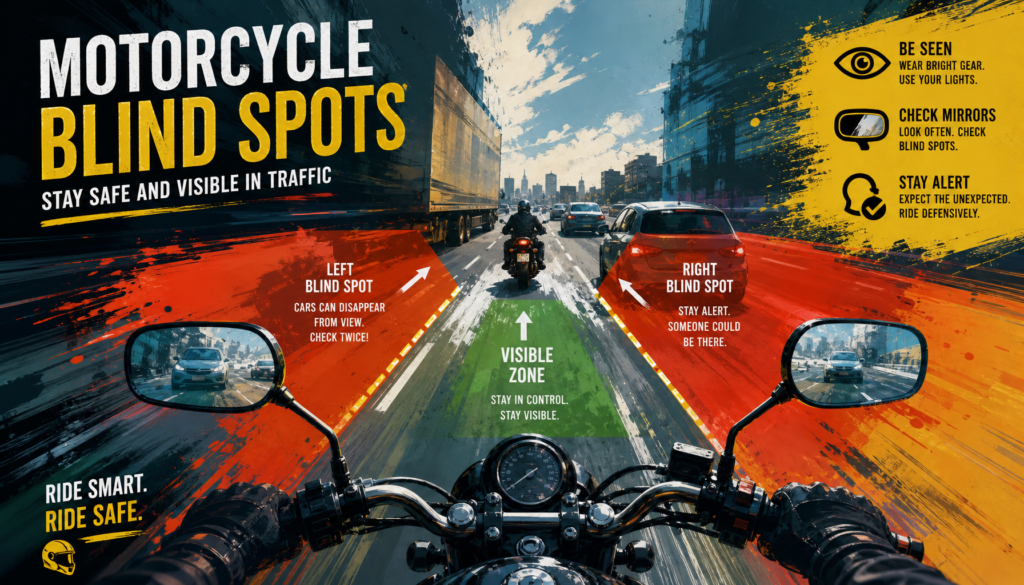
Motorcycle Blind Spots: Stay Safe and Visible in Traffic
Jul
Motorcycle Blind Spots: Motorcycle riders in Singapore face unique challenges on the road. One of the most significant risks involves motorcycle blind spots. Did you know that nearly 70% of motorcycle accidents occur due to visibility issues? With our congested streets and busy traffic, staying safe and visible has never been more crucial for motorcyclists.
This blog post will explore common blind spots for motorcycles, how to identify them, and practical tips to enhance your visibility while riding. We will also discuss the importance of defensive riding and the best practices to minimize risks on the road. Making small adjustments in your riding habits can make a world of difference. Let’s dive into how you can ensure your safety and visibility in traffic.
Motorcycle Blind Spots: Stay Safe and Visible in Traffic 2026
Motorcycle Blind Spots: Understanding motorcycle blind spots is crucial for rider safety, particularly in busy urban environments like Singapore. These blind spots refer to areas around vehicles that are not visible through mirrors, making motorcyclists more susceptible to accidents. Due to their smaller size compared to cars and larger vehicles, motorcycles can easily go unnoticed by other drivers, emphasizing the importance of being aware of these dangerous zones.
In urban areas, common vehicle blind spots include the sides, rear, and front zones of large vehicles such as trucks, buses, and SUVs. Motorcyclists should be particularly cautious when riding near these larger vehicles, as lingering in their blind spots can significantly increase the risk of collisions. It’s advisable for riders to maneuver out of these zones quickly to ensure their visibility to other drivers.
Motorcycle Blind Spots: To enhance visibility, riders can adopt several strategies. Wearing bright gear, utilizing headlights during the day, and positioning the motorcycle in sightlines can greatly reduce the chance of being overlooked. In a bustling city like Singapore, adopting these practices not only promotes personal safety but also aligns with local road safety regulations.
Moreover, proper lane positioning and safe overtaking practices are essential for motorcyclists. Riders should aim to pass quickly and safely when navigating through blind spots. Staying alert and anticipating sudden lane changes from other vehicles can make a world of difference. Defensive riding techniques, such as maintaining safe distances and reading traffic patterns, should become second nature to any motorcyclist keen on safe riding.
Ultimately, awareness of motorcycle blind spots can lead to safer riding experiences. By understanding where these blind spots exist and implementing defensive strategies, riders can significantly enhance their visibility and safety in Singapore’s ever-busy traffic conditions.
Understanding What Blind Spots Are
Motorcycle Blind Spots: Blind spots are crucial areas around vehicles where drivers have limited visibility and cannot easily see other road users solely using their mirrors. For motorcyclists, these blind spots pose a significant risk due to their smaller size, making them harder to notice in traffic. Statistics indicate that a considerable percentage of motorcycle accidents occur because riders are not seen by other vehicles, especially when they are in the blind spots of larger vehicles.
Understanding these blind spots is vital for ensuring safety on the road. Large vehicles like trucks, buses, and SUVs are known to have extended blind spots around their sides, rear, and even the front. Motorcyclists should be particularly cautious when maneuvering around these vehicles, as lingering in these zones for extended periods can dramatically increase the risk of accidents.
Motorcycle Blind Spots: To enhance visibility and minimize the likelihood of being overlooked, motorcyclists can take several proactive measures. Wearing bright gear can make a substantial difference, as can using headlights even during the day. Additionally, positioning the motorcycle where drivers can see it best is also a smart tactic for reducing blind spot risks.
Proper lane positioning and cautious overtaking are equally important. Motorcyclists should be aware of their surroundings and avoid positioning themselves directly beside larger vehicles whenever possible. Instead, moving past quickly and safely when entering blind spot areas can help prevent dangerous situations.
Defensive riding techniques are also key in navigating through traffic safely. Riders should always anticipate sudden lane changes or turns from nearby vehicles and maintain a safe distance to react effectively. Staying alert and reading traffic patterns are essential habits that every motorcyclist should adopt to ensure their safety on the road.
By understanding what motorcycle blind spots are and implementing these strategies, riders can significantly increase their safety and visibility in traffic.
Common Vehicle Blind Spot Zones
Motorcycle Blind Spots: When navigating traffic, understanding motorcycle blind spots is crucial for safety. Blind spots, defined as areas around vehicles that are not visible in mirrors, pose significant risks, particularly for motorcyclists due to their smaller profile. Knowing the common blind spot zones can help riders avoid potential accidents.
One of the most notorious blind spot zones is around large vehicles, especially trucks and buses. These vehicles typically have wider blind spots on their sides, rear, and front areas. For instance, a truck can have a blind spot extending up to 20 feet in front and several feet on either side. The same applies to buses, which often block visibility when turning or changing lanes.
Motorcycle Blind Spots: Motorcyclists should take extra care to avoid lingering in these zones for extended periods. It’s advisable to keep a safe distance from large vehicles, ensuring that you can be seen easily by their drivers. Avoid riding in a truck’s or bus’s immediate vicinity, as being in their blind spots can significantly increase the risk of an accident.
Additionally, wearing bright gear and utilizing your motorcycle’s headlights—even during the day—can help increase visibility. Positioning your motorcycle where drivers can easily spot you, such as slightly ahead in their line of sight, is also crucial. These proactive measures can make a significant difference in how visible you are to other road users.
Remember, defensive riding techniques are your best strategies. Anticipate sudden lane changes or turns, and maintain a safe distance from vehicles, especially larger ones. By staying alert and understanding traffic patterns, you can better navigate around common blind spot zones and enhance your overall safety on the road.
Quick Specs: Motorcycle Visibility Techniques
Motorcycle Blind Spots: When it comes to staying safe on Singapore’s roads, understanding and addressing motorcycle blind spots is crucial. Proper visibility techniques can greatly enhance your safety as a rider, enabling you to be seen and recognized by other motorists. Below, we present a quick comparison table of effective visibility techniques that every motorcyclist should consider.
| Visibility Technique | Effectiveness Rating | Best Practices |
|---|---|---|
| Wearing Bright Gear | High | Opt for neon or reflective jackets, trousers, and helmets that stand out against road backgrounds. |
| Using Headlights | High | Keep your headlights on at all times, especially during the day. It increases your visibility to other drivers. |
| Positioning the Motorcycle | Medium | Place your bike in a lane where you can be easily seen by other vehicles; avoid lingering in large vehicle blind spots. |
| Defensive Riding | Medium | Always anticipate and keep a safe distance from larger vehicles, maintaining an escape route in case of sudden lane changes. |
| Using Turn Signals | Medium | Always signal your intentions clearly, ensuring that other road users can anticipate your movements. |
These techniques can dramatically reduce your likelihood of being overlooked in traffic. As a responsible rider, always strive to implement these strategies regularly. Given Singapore’s busy roads and strict LTA regulations, enhancing your visibility is not just a safety measure but also a smart riding practice.
Invest in high-quality riding gear and stay alert while navigating through various environments, from urban streets to more rural stretches. By combining these visibility techniques with defensive riding habits, you can reduce your risks and enjoy a safer riding experience on Singapore’s roads.
Safe Overtaking and Lane Positioning
Motorcycle Blind Spots: Safe overtaking and proper lane positioning are vital skills for motorcyclists, particularly for navigating around blind spots. Blind spots are areas that drivers cannot easily see through their mirrors, and motorcyclists are particularly at risk due to their smaller stature. To minimize the chances of accidents, it’s essential for riders to adopt strategies that enhance their visibility and safety on the roads.
One effective strategy is to maintain a position that is easily visible to other motorists. By positioning your motorcycle where it can be seen in a driver’s peripheral vision, you decrease the likelihood of being overlooked. This often means adjusting your lane position to avoid staying directly beside larger vehicles such as trucks and buses that have extensive blind spots.
When it comes to overtaking, swift and safe maneuvers are crucial. Riders should aim to pass other vehicles quickly, ensuring that they do not linger in blind spot zones longer than necessary. Planning your overtaking moves can significantly reduce risks; always check the surrounding traffic and ensure there is ample space to maneuver safely.
Motorcycle Blind Spots: Additionally, it’s vital to be aware of the common blind spot areas around various vehicles. Large SUVs and trucks generally have wider blind spots, especially on the sides and rear. Therefore, before overtaking, always glance over your shoulder to verify that you have enough space. Using indicators well in advance signaling your intent to change lanes can also alert other road users to your movement.
Incorporating defensive riding techniques enhances overall safety. Riders should stay alert, keep a safe distance from the vehicles, and constantly read traffic patterns. Developing these habits can significantly decrease the chances of blind spot-related accidents.
In Singapore, adherence to Land Transport Authority (LTA) regulations regarding road safety is essential. Riders should always prioritize their visibility, as this not only protects them but also encourages more considerate behavior from other motorists. By applying these safe overtaking and lane positioning strategies, you can navigate the roads confidently and safely.
Defensive Riding Techniques
Motorcycle Blind Spots: Defensive riding techniques are crucial for motorcyclists, especially when navigating through traffic where motorcycle blind spots can pose significant risks. One of the key principles of defensive riding is to always anticipate the movements of surrounding vehicles. It’s essential to keep an eye on the behavior of other drivers, watching for indicators of lane changes or sudden stops.
Maintaining a safe distance from other vehicles is another fundamental technique. By ensuring you have enough space to react, you increase your chances of avoiding collisions. A good rule of thumb is to keep at least a two-second gap between your motorcycle and the vehicle in front. This distance allows you to have ample time to react in case of a sudden halt.
Motorcycle Blind Spots: Staying alert while riding is also a vital component of defensive riding. Constantly scanning your surroundings for potential hazards helps ensure you don’t miss anything crucial. Pay attention to the behaviour of cars and trucks around you, as larger vehicles often have wider blind spots. Remember, large vehicles like trucks and buses can conceal smaller motorcycles due to their size, making it imperative to avoid lingering in these areas.
Additionally, consider your lane positioning. Riding in the left or right third of your lane rather than the center can improve your visibility to other drivers. When overtaking, do so quickly and safely while being cautious of any surrounding blind spots. Meanwhile, using your motorcycle’s headlights even during the day can enhance your visibility to other drivers.
In conclusion, embracing defensive riding techniques is not just about controlling your motorcycle; it’s about being acutely aware of your environment and the potential blind spots of others on the road. By anticipating vehicle movements, maintaining safe distances, and staying alert, you can significantly enhance your safety while enjoying the open roads of Singapore.
Frequently Asked Questions
What should I look out for when riding near large vehicles?
When riding near large vehicles like trucks or buses, it’s crucial to be aware of their extensive blind spots, which can obscure your presence. Always ensure that you can see the driver in their side mirror; if you can’t, they likely can’t see you. Avoid lingering beside these vehicles, as they may change lanes unexpectedly.
How can I improve my visibility as a motorcyclist?
Improving visibility as a motorcyclist is essential for safety. Wear bright and reflective gear to stand out, especially during night rides or low-light conditions. Additionally, keeping your headlights on at all times can significantly enhance your visibility on the road and make you more noticeable to drivers.
Are there specific laws regarding motorcycle visibility in Singapore?
In Singapore, the Land Transport Authority (LTA) emphasizes the importance of visibility for motorcyclists to enhance road safety. It is crucial for riders to follow regulations on wearing reflective gear and using proper lighting to comply with safety standards, thereby reducing the likelihood of accidents.
What riding gear enhances visibility?
Riding gear that enhances visibility includes jackets, gloves, and helmets designed with reflective materials or bright colors. Such gear not only makes you more noticeable but also contributes to your overall safety. Incorporating LED lights on your motorcycle can also improve your visibility further, making nighttime riding safer.
How can I practice defensive riding effectively?
Effective defensive riding involves staying alert and anticipating potential hazards on the road. Always maintain a safe distance from other vehicles and be prepared for erratic movements from drivers. Regularly scanning traffic patterns and positioning yourself strategically within the lane can significantly improve your response to sudden changes or surprises on the road.
Our Verdict: Stay Safe on the Roads
Motorcycle Blind Spots: In conclusion, understanding and addressing motorcycle blind spots is crucial for enhancing safety on the roads. These blind spots pose a significant risk for motorcyclists due to their smaller size, making them less visible to other drivers. By recognizing where these blind spots exist, particularly around larger vehicles like trucks and buses, riders can take proactive measures to stay out of danger.
One effective strategy is to wear bright gear and ensure your motorcycle’s headlights are always on. This simple practice can greatly enhance visibility, especially in low-light conditions or busy traffic. Additionally, positioning your motorcycle in a way that makes it easier for other drivers to see can further mitigate risks.
Motorcycle Blind Spots: When it comes to overtaking and lane positioning, it is vital to pass quickly and safely while avoiding lingering beside large vehicles. Proper lane positioning helps keep motorcyclists visible and reduces the likelihood of being caught in another driver’s blind spot. Furthermore, employing defensive riding techniques can significantly increase safety. Anticipating the actions of nearby vehicles and maintaining safe distances are essential practices that every rider should adopt.
By integrating these strategies into your riding routine, you can effectively reduce the risk of accidents caused by blind spots. Whether you’re commuting in Singapore’s busy streets or enjoying a leisurely ride, taking steps to improve your visibility can save lives. Remember that staying safe is not just about your control but also about making yourself visible to others. Prioritize your safety and ride smartly!
We at Speedzone specialize in offering top-quality servicing for a variety of premium motorcycle brands. Whether you ride a Yamaha, Honda, KTM, Suzuki, Kawasaki, SYM, Aprilia, Piaggio, or Mutt Motorcycle, you can trust us to keep your ride running smoothly.
Book Your Service Today
Ready to give your motorcycle the care it deserves? Or just curious to know more? With our premium motorcycle accessories available catering to every motorbike models. Book your motorcycle servicing with us or drop by our showroom today and experience the difference of expert servicing tailored to your brand and friendly staffs!
