
Motorcyclist fines and offences
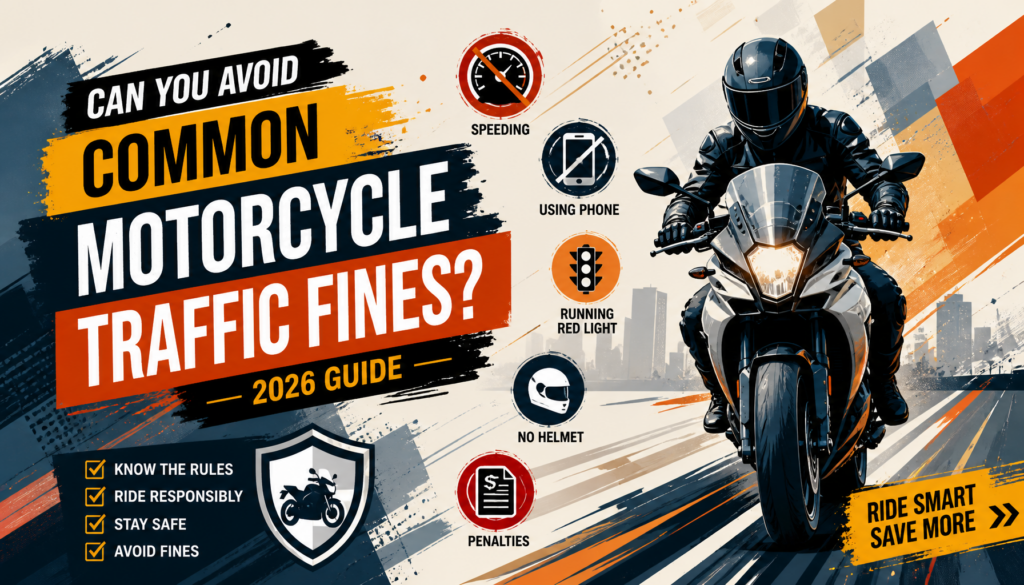
Can You Avoid Common Motorcycle Traffic Fines? 2026 Guide
Aug
Avoid Common Motorcycle Traffic Fines: Every motorcycle rider has had that moment: a random stop, a quick glance at the road, and a surprise notice in hand. One small miss can ruin a ride and drain your budget fast. If you want to avoid common motorcycle traffic fines, you will need more than luck, especially in 2026. Good habits can save time, money, and stress.
Avoid Common Motorcycle Traffic Fines: This guide explains the top causes of the most frequent tickets, from speeding and helmet checks to lane use, lights, and document mistakes. It also covers what officers usually look for, how repeated slips increase risk, and the practical steps that keep your ride legal before problems begin. You will see where riders often go wrong after a stop, and the first actions that protect your rights and your wallet. By the end, you will have a simple checklist you can use every day before each ride, during inspections, and if you are pulled over. Let us start with the five biggest mistakes and easy fixes you can apply immediately.
Common Motorcycle Traffic Fines You Can Avoid in 2026: A Rider’s Survival Guide
Avoid Common Motorcycle Traffic Fines: Most riders assume motorcycle penalties are random, but most of the most painful outcomes come from habits you can control. In 2026, the difference is simpler: treat enforcement as predictable, not mysterious. This section focuses on real-world Common Motorcycle Traffic Fines and gives practical actions you can apply in city, suburban, and highway riding to reduce stop-and-ticket stress.
We will stay focused on five repeatable areas that keep appearing across traffic stops: speed, licensing, registration and insurance, safety equipment, and road behavior. The goal is to give you a clear checklist, not a law textbook, so you know exactly where to apply attention before you ride. If you follow these steps, you spend less time fixing mistakes and more time riding confidently.
- Speeding Violations (posted limits, school zones, construction zones, speed cameras, radar checks).
- License, Registration & Insurance Offenses (valid license, current registration, active insurance, and required documents).
- Safety Equipment Violations (approved helmet, required protective gear, lights/mirrors/turn signals, noise and exhaust compliance).
- Road Rule Violations (signals, lights, phone use, overtaking behavior, lane use, right-of-way).
Avoid Common Motorcycle Traffic Fines: On the speeding violations front, penalties and demerit points are usually triggered by repeat exposure, not one-off moments. Exceeding posted limits is the obvious risk, but school zones and construction zones create extra scrutiny because local authorities expect tighter control there. With speed cameras and radar enforcement, arguments often lose against clear evidence, so defensive speed management is your best prevention investment.
For license, registration, and insurance offenses, the biggest leak is not skill-related but administrative. Riding without a valid motorcycle license, on expired registration, or without valid insurance coverage can cause immediate legal trouble even for short local trips. Carry required documents in an easy-to-reach place, and treat document checks as part of your pre-ride routine, especially if you move between city and suburban routes where roadside checks are common.
Safety equipment violations often feel technical but are straightforward to avoid. Not wearing an approved helmet, missing mandatory protective gear, or riding with faulty lights, mirrors, or turn signals can trigger tickets that hurt both wallet and safety. Illegal exhaust modifications and excessive noise are also common mistakes; if your setup changes performance or sound, assume scrutiny is possible and keep it compliant before you head out.
Road-rule violations are the second-biggest source of avoidable fines: red lights/stop signs, unsafe overtaking, illegal lane splitting, phone use while riding, and not signaling or yielding. These are especially common in dense traffic where urgency feels normal. In a practical checklist, add a one-minute rule: signal, check mirrors, and yield before every maneuver.
- City riding: prioritize school-zone speed discipline, signal discipline, and visibility because stop-go traffic creates frequent enforcement points.
- Suburban riding: watch transitions between open roads and local zones; perform regular bike inspections for lights and mirrors before weekend runs.
- Highway riding: respect posted limits and avoid assumptions about “fast lanes,” focusing on smooth, legal overtaking and consistent lane behavior.
In short, these common motorcycle traffic fines in 2026 are mostly avoidable by systemizing your prep: keep documents current, fix equipment issues early, and stay current on local rules. Build this habit now and you reduce the risk of paying penalties, interrupting your trip, or accumulating points from avoidable citations.
Quick Specs: Common Motorcycle Traffic Fines by Offense Type
Avoid Common Motorcycle Traffic Fines: When riders look for Common Motorcycle Traffic Fines, they usually want a practical prevention guide, not legal theory. This quick comparison maps the most frequent offense buckets and the likely enforcement method used, then pairs each one with a fix-it action. Exact figures are shown as placeholders because specific fine ranges, demerit points, and license actions vary by state/province/country, but local wording is usually clear on what behavior caused the ticket.
| Offense Category | Typical Trigger | Enforcement Method (camera, radar, roadside stop) | Common Consequences (fine range, demerit points, license action if applicable) | Fix-It Action |
|---|---|---|---|---|
| Speeding Violations | Exceeding posted speed limits, including entering school zones and construction zones too fast. | Camera and radar plus roadside speed checks. | Fine range: $X–$Y; demerit points: 0–N; license action: possible warnings, point-based escalation, or licensing review based on local repeat-offense rules. | Reduce speed at the first sign of reduced limits, especially around schools and work zones. Use local limits as your default in changing conditions. |
| License, Registration & Insurance Offenses | Riding without a valid motorcycle license, expired registration, no valid insurance, missing required documents. | Roadside stop and documentation checks. | Fine range: $X–$Y; demerit points: 0–N; license action: suspension, suspension extension, or restricted licensing outcomes in some regions. | Keep license, registration, insurance, and required documents current and easy to present before leaving the garage. |
| Safety Equipment Violations | Not wearing an approved helmet, improper or missing protective gear where required, faulty lights/mirrors/turn signals, illegal exhaust noise mods. | Mostly roadside stop inspections and station-based checks. | Fine range: $X–$Y; demerit points: 0–N; license action: fines plus potential safety-related license conditions depending on severity. | Use approved gear, confirm mandatory items before every ride, and inspect lights, mirrors, and signals so equipment failures don’t become avoidable charges. |
| Road Rule Violations | Running red lights/stop signs, illegal lane splitting, unsafe overtaking, mobile phone use while riding, failure to signal or yield right of way. | Traffic cameras and selective roadside stop operations. | Fine range: $X–$Y; demerit points: 0–N; license action: license action or training requirements in repeated dangerous cases. | Practice defensive riding, obey hand signals and lane discipline, and review local updates on lane splitting and overtaking rules. |
Avoid Common Motorcycle Traffic Fines: For city commuters and suburban riders, this matters most at predictable choke points: school zones, commercial corridors, and frequent signalized intersections. In those environments, enforcement is typically consistent and repeatable, so a compliance routine beats reactive defense. Riders who plan this as part of trip prep usually spend less time dealing with tickets and more on riding.
- Use this table as a weekly checklist before long rides, then prioritize the highest-risk row for your route.
- Match local conditions to enforcement patterns: camera-heavy areas need strict speed and signal discipline; roadside-heavy areas need stronger documentation readiness.
- Stay informed about updated regulations, especially after local roadworks or seasonal campaigns, because the exact wording of infractions can shift by jurisdiction.
Taking action on Common Motorcycle Traffic Fines is a simple purchase decision for peace of mind: invest a few minutes in preparation and documentation, and you can reduce the chance of expensive enforcement encounters without changing how much you ride.
Speeding Violations: Posted Limits, School Zones, Construction Zones, and Camera Enforcement
Avoid Common Motorcycle Traffic Fines: In the broad landscape of Common Motorcycle Traffic Fines, speeding violations remain the leading source of trouble for riders because they often feel invisible in the moment. One simple misjudgment—riding a few kilometers over the limit—can turn into a chain reaction: the base fine, added enforcement penalties, demerit points, and potentially stronger licensing consequences depending on local law. That is why smart riders treat speed as a legal decision, not just a performance choice, before every trip.
First is basic over-limit riding. Even on familiar roads, posted limits can change with a single sign, and riders who are used to matching traffic flow often push into legal danger at merge points and downshifts. The key behavior fix is lane-speed discipline: pick a lane pace that fits the posted limit and reduce speed early when road geometry, weather, or visibility changes. If a ride feels routine, use a strict self-check every 20 to 30 seconds so you reset your speed and avoid drifting above the mark.
Second are school zones and construction zones, where reduced limits are common and penalties are often strict. In school areas, temporary conditions can lower speed at specific times and the legal expectation changes quickly; in roadwork areas, temporary signs and lane shifts can reduce safe speed before you realize it. Keep a conservative mindset there: treat any work-zone flagging, cones, or temporary signs as a cue to reset speed first, then confirm lane position. Missing these transitions is a common way to stack violations.
Third is how violations are detected. Fixed radar posts and mobile radar patrols are both widely used, but modern systems often layer evidence through speed cameras and ALPR-linked enforcement, where plate captures support quick case-building around repeat behavior. This means even one risky section of route can produce more than one enforcement action if you pass multiple detection points in one ride. That can leave riders facing not only separate fines but also compounding records, making the outcome feel heavier than expected.
- Pre-ride route planning: before departure, review your route for school areas, active construction, and any known enforcement corridors so the legal speed for each segment is clear.
- Lane-speed discipline: establish a firm target speed for each lane and road class, then use progressive braking rather than sudden correction.
- Camera-aware routing: when possible, choose alternate roads around dense enforcement corridors, especially for non-urgent rides where time is less critical than clean compliance.
Avoid Common Motorcycle Traffic Fines: For riders in cities with heavy commuting or frequent infrastructure work, these habits become practical risk management. If avoiding future fines is a priority, align your routine with local traffic rules now, because consistent compliance is the simplest way to prevent the expensive surprise of avoidable citations and preserve a clean profile in your Common Motorcycle Traffic Fines history.
License, Registration & Insurance Offenses: Paperwork Errors that Trigger Immediate Tickets
Avoid Common Motorcycle Traffic Fines: Most riders associate Common Motorcycle Traffic Fines with aggressive riding, yet many of the first tickets written at a roadside stop are simple paperwork failures. During enforcement checks, officers often verify documents first because they can confirm legal status in minutes. That means a missing certificate or expired card can trigger a stop outcome before rider behavior is even fully reviewed, which is frustrating and avoidable.
One major trigger is a mismatch between your license and what you are riding. If you do not hold a valid motorcycle license class for the machine you are on, the offense is straightforward and immediate. Keep your license valid, current, and matching your engine category, especially if you recently upgraded your bike or moved between commuter and larger-capacity models. Riders who treat this as a “formality” often discover it is the first source of preventable enforcement time and cost.
Avoid Common Motorcycle Traffic Fines: Vehicle registration is the second frequent problem. An expired registration can appear valid at a glance to a hurried rider, but once flagged by an officer, many jurisdictions issue a ticket right away because records are easy to confirm. The same goes for insurance coverage. If proof has lapsed, is canceled, or can’t be produced in time, enforcement may still stop the bike even if you are otherwise riding safely.
What gets people into trouble most often is not always reckless conduct, but missing paperwork during a stop. Not carrying required documents means you may still be fined for inspection-related noncompliance, and then later questions become secondary. The practical mindset is simple: your ability to prove license, registration, and insurance status should be as automatic as checking tire pressure.
A simple routine helps keep this under control:
- Keep original documents in a waterproof sleeve you can access quickly during roadside checks.
- Store clear scans and photos in at least two backups: phone and secure cloud folder.
- Set calendar reminders 30 and 14 days before your license renewal, registration renewal, and insurance renewal dates.
- After each trip, quickly verify that all required papers were present and readable.
- Before long rides, review local requirements for documents and any temporary permit rules in the state or province you are crossing.
Authorities typically review license class, registration validity, and insurance proof as first-line verification, and these checks are usually binary: valid or not. If anything is missing, you lose time and confidence on the spot, and your journey goals take a back seat to administration. Make documentation discipline part of your pre-ride ritual, and you reduce avoidable tickets significantly while gaining confidence for long-distance travel and daily commuting alike. This is one of the most cost-effective ways to improve your riding peace of mind.
Safety Equipment Violations: Helmet Compliance, Protective Gear, and Faulty Controls
Avoid Common Motorcycle Traffic Fines: Among the Common Motorcycle Traffic Fines, safety equipment violations are often the ones riders can prevent with simple routine discipline. The most expensive fine in this category is usually not from a dramatic mistake, but from a small oversight like a dim mirror or missing brake signal that is easy to miss on a busy morning. If you ride in cities that run frequent inspections, consistency is your best defense.
Helmet compliance is the first checkpoint. Not wearing an approved helmet can attract a charge immediately, and a damaged but seemingly usable helmet can still fail if inspected closely. Make sure your helmet is the approved type for your jurisdiction, with an intact buckle and secure fit every time you ride. For commuters leaving bikes outdoors, heat and UV exposure can degrade straps faster, so include this check in your weekly habit and replace gear at the first sign of wear.
Where local rules require extra protective gear, do not treat it as optional. Improper or missing protective items are still citations for enforcement teams even if your speed and route are perfect. Ask your local authority what is mandatory where you ride, because required gear expectations can vary by area and use case.
Avoid Common Motorcycle Traffic Fines: Mechanical safety checks are the next weak point. Faulty lights, mirrors, turn signals, and brake lights are common fail points in roadside and inspection checks, and these problems can appear from vibration, rain, or poor maintenance. Riders who do daily commuting and weekend touring should be stricter: visibility failures are easy to spot and can quickly escalate into avoidable penalties.
Illegal modification risk is also part of this section. Excessive noise or altered exhaust components can trigger enforcement and sometimes create inspection visibility concerns around controls and bodywork. If a modification is loud, rough-looking, or makes checks difficult, remove or correct it before your next legal ride window.
Weekly pre-ride inspection checklist:
- Check helmet shell, visor, and strap integrity for proper lock and adjustment.
- Inspect required protective gear for cracks, tears, and loose closures.
- Test headlight operation and confirm brake light response is visible when braking.
- Verify both mirrors are present, mounted firmly, and clean.
- Activate left and right turn signals and confirm each direction flashes properly.
- Scan for illegal, noisy exhaust alterations and ensure no control or visibility obstruction exists.
- Do a final walk-around for loose wiring, broken mounts, and obvious damage before each weekly ride block.
Following this checklist each week lowers the chance of a roadside stop and turns compliance into muscle memory. It also helps riders build confidence that the bike and gear are inspection-ready before every trip. If you are comparing new gear or replacement components, choose compliant options and you’ll remove uncertainty from both enforcement and resale decisions later.
Road Rule Violations: Red Lights, Lane Splitting, Overtaking, and Distracted Riding
Avoid Common Motorcycle Traffic Fines: When riders look at the causes of Common Motorcycle Traffic Fines, road-rule mistakes are often at the top: running red lights or stop signs, unsafe overtaking, confusing lane behavior, and distracted riding. These are not complicated offences, but they are enforced frequently, especially in dense traffic and signal-heavy streets. The good news is that your risk drops fast when your routine becomes predictable, legal, and visible to other road users.
Intersections and urban corridors create repeated conflict points, so they are common enforcement zones. At these spots, a small delay, missed hand signal, or late decision can trigger violations like failure to signal or yield. For motorcyclists, that risk is amplified because visibility and spacing change rapidly with each lane change, turning movement, and queue. If you ride for commuting or short urban trips, this is exactly where your ticket exposure tends to spike.
Use these habits as a practical compliance kit:
- Hand-signal discipline: Signal every directional change well before you move, even on short turns or lane shifts. A clear, consistent signal gives drivers time to react and lowers assumptions about your intent, especially in mixed-traffic corridors where lane behavior is already tense.
- Scan discipline: Build a two-stage scan habit at lights and merges: far scan for hazards first, then mirror and lane checks before moving. Distractions shrink your scan window, so commit to checking mirrors and blind spots without skipping steps.
- Left/right clearance discipline: In overtaking or filtering situations, keep a protective distance from moving vehicles and never assume space is sufficient just because the lane feels clear. This is especially important if local rules on illegal lane splitting or unsafe overtaking are strict or interpreted conservatively by enforcement teams.
- Route simplification: If local laws and traffic patterns allow, simplify routine routes to avoid unnecessary intersections, weaving, or repeated lane transitions. Fewer complex junctions means fewer high-pressure moments where a split-second choice becomes a fine.
For distracted riding, avoid phone use while moving; if your work or lifestyle demands frequent communication, stop where legal and safe before touching the screen. In many cities, enforcement is less concerned with your route choice and more with whether your behavior matches current local rules, so stay informed about updates from transport authorities. Mastering these habits is a low-cost, high-impact way to protect your legal record, reduce stress, and keep riding time focused on a clean, controlled ride rather than ticket avoidance after every urban commute.
2026 Guide vs 2025 Rules: New Enforcement Trends, Local Regulations, and Rider Use-Case Constraints
Avoid Common Motorcycle Traffic Fines: If you ride in 2026, do not assume last year’s habits are enough. The 2026 Guide vs 2025 Rules contrast for Common Motorcycle Traffic Fines shows that many violations are the same, but enforcement is sharper where risk is highest: speed, documentation, and equipment compliance. In 2025, riders were often stopped after visible violations; in 2026, automated and check-based enforcement is layered on top of roadside controls, so a small mistake can quickly become a fine plus demerit point issue. The practical result is simple: prevention now depends on consistency, not just reaction.
Use this comparison by your riding role to avoid avoidable penalties:
| Riding context | 2025 pattern | 2026 trend | What changes your risk |
|---|---|---|---|
| Commuter | Speeding in mixed roads and school-zone transitions remained the top citation source, often through fixed-point camera or radar checks. | Greater camera coverage in high-traffic corridors and tighter speed scrutiny around vulnerable zones and school periods. | Recheck posted limits before every trip, especially in school and construction zones, and keep defensive speed habits on primary roads. |
| Courier / delivery rider | Common issues were missed signals, unsafe overtaking, and rushed lane changes. | Broader enforcement sweeps and more frequent inspections on repeat routes, with road-rule breaches linked faster to repeated penalties. | Treat every shift like an exam: ride signals, lane changes, and stopping discipline before timing pressure. |
| Touring rider | Violations clustered around unfamiliar roads, especially across municipal boundaries. | Cross-jurisdiction enforcement is stricter on licensing and insurance checks during multi-region trips. | Plan by city/state rule differences on low-speed zones, local helmet mandates, and equipment interpretation before entering new areas. |
| Learner rider | Document-related infractions and mobile phone use were frequent among new license holders. | In many areas, first-line inspections are stricter on valid license, current registration, and insurance visibility. | Keep all required documents current and accessible; avoid phone use completely to remove preventable evidence-based violations. |
| Pillion support rider | Helmet and gear non-compliance appeared less often, but still costly where mandatory. | Equipment checks now include stricter look at required protective standards and faulted lights/mirrors or illegal exhaust noise. | Confirm rider requirements at home and destination, and inspect bike lights, mirrors, signals, and exhaust setup before pickup. |
These shifts are especially important in city and state pockets with dedicated low-speed zones, where even moderate mistakes are now treated as repeated non-compliance opportunities. Learners, commuters, and couriers often underestimate how quickly fines accumulate when inspections are frequent and documentation lapses coincide with one road-rule error.
That is why your safest purchase decision is not a new tool, but a new routine: 60-second pre-ride inspection, a current-docs folder, and route-specific rule check before long rides. This simple process reduces uncertainty and gives you stronger confidence against variable local enforcement while protecting both time and budget.
Frequently Asked Questions
How much are the most common Motorcycle Traffic Fine amounts in my region?
The first thing to remember is that there is no single global amount for Common Motorcycle Traffic Fines. Speeding, road-rule, licensing, insurance, and safety equipment violations are each priced by local court schedules, and local authorities may add administrative fees in addition to the base amount. For long-term planning, check your city, state/province, and municipal transport pages before each trip because penalties near school zones or construction zones can be calculated differently and often include demerit points.
Do school-zone fines differ at night and on weekends?
Yes, they can differ, but only if local rules say they do. In some jurisdictions, reduced school-zone speed limits and strict enforcement apply only during school hours, while in others they may be in force at all times. For riders who commute through school areas on weekends or run late shifts, this is one of the biggest uncertainty points, so always read updated local signage and official notices to avoid assumption-based mistakes.
Can I contest a speed-camera or radar ticket from a motorcycle stop?
In most places, you can request a review or contest process, but it is time-bound. Keep your ride plan notes, copies of your valid motorcycle license, registration status, and any photos or timestamps that prove conditions on the road that day. If the enforcement evidence is weak or your paperwork was incorrectly recorded, a quick, organized appeal often reduces errors in ticket handling and can prevent repeat penalties from turning into a larger demerit-point issue.
What documents must I carry on my motorcycle, and can expired documents cause extra charges?
Riders are commonly required to carry a valid motorcycle license, up-to-date registration, and proof of valid insurance at all times. Failing to carry any of these can lead to separate enforcement actions, including citations linked to license, registration & insurance offenses. Keep originals in a waterproof holder and store scanned backups in your phone; this also helps delivery or frequent-trip riders who face frequent checks and unpredictable stop-and-check schedules.
Will one offense raise my insurance premium or suspend my license?
Whether one offense affects premium or license status depends on the offense type and how many demerit points the authority applies in your area. Minor first-time violations may stay isolated, while repeated violations tied to speeding, unsafe lane behavior, broken lights/mirrors, or phone use can trigger stricter outcomes over time. Confirm with your insurer and local licensing office early, and combine legal compliance with regular bike inspections and defensive riding habits to reduce the risk of turning one fine into a costly series.
Our Verdict: Can You Avoid Common Motorcycle Firing? Take the 10-Minute Fine-Proof Routine Before Your Next Ride
Avoid Common Motorcycle Traffic Fines: Our verdict: you can reduce the risk of Common Motorcycle Traffic Fines dramatically, and you don’t need a complex system to do it. The quickest results come from a repeatable routine that mixes smart riding habits with basic compliance checks. If your goal is to keep your rides legal, confident, and interruption-free, your best tool is a simple 10-minute discipline block: one that targets the exact violation types that most often lead to penalties, fines, and demerit points.
Start with daily defensive habits, since this is where prevention happens in real time. Keep speed tied to posted limits, especially in school zones and construction zones, because those areas are high-risk for enforcement and speed camera surprises. Don’t force unsafe passes, don’t rely on lane splitting where it is illegal, and never ride with a phone in hand. Always signal clearly, obey lights and stop signs, and yield where required, because road-rule violations can pile up quickly when you’re rushing.
Use this 10-minute pre-ride routine:
- Minute 1: Confirm helmet and required protective gear are present and serviceable, as non-compliance can trigger immediate fines.
- Minutes 2–3: Quick visual scan for working lights, mirrors, and turn signals; faulty equipment is a common stop reason.
- Minute 4: Check noise or modifications are compliant; loud or illegal changes can attract enforcement attention.
- Minutes 5–6: Verify your motorcycle license, registration, and insurance are valid and easy to present.
- Minutes 7–8: Review your route for school hours, known construction zones, and intersection behavior that encourages cautious speed.
- Minutes 9–10: Do a final calm ride check: breathe, stay defensive, and remind yourself to resist speeding pressure.
Then make compliance a weekly habit: run a fuller bike and document check, including required paperwork and all mandatory safety hardware, instead of hoping for the best on departure day. This matters for riders who primarily run short commutes, where many skip checks because they feel routine.
Finally, update monthly. Local motorcycle laws, enforcement priorities, and camera zones do change, and one town’s interpretation can differ from the next. If you want an easy fix now: download/print the prevention checklist, review local motorcycle laws before each trip, and schedule one routine compliance audit this week. That single action shifts you from guessing to actually preparing—and that improves your odds of avoiding the exact ticket traps most riders face.
We at Speedzone specialize in offering top-quality servicing for a variety of premium motorcycle brands. Whether you ride a Yamaha, Honda, KTM, Suzuki, Kawasaki, SYM, Aprilia, Piaggio, or Mutt Motorcycle, you can trust us to keep your ride running smoothly.
Book Your Service Today
Ready to give your motorcycle the care it deserves? Or just curious to know more? With our premium motorcycle accessories available catering to every motorbike models. Book your motorcycle servicing with us or drop by our showroom today and experience the difference of expert servicing tailored to your brand and friendly staffs!
